Channel Islands
By Julian Bialowas & Daniel Tomko·Updated April 2026
You want to know what California looked like before California happened? Take a boat to the Channel Islands. Specifically, take the Island Packers ferry from Ventura Harbor—it's the only game in town, and it's been running trips out to these five islands since 1968. The crossing takes about an hour to Santa Cruz Island, and the moment Ventura disappears behind you, something shifts. Cell service drops. The noise drops. What's left is open ocean, brown pelicans riding the bow wake, and occasionally dolphins.
The Channel Islands National Park spans five islands—San Miguel, Santa Rosa, Santa Cruz, Anacapa, and Santa Barbara—but for most campers, Santa Cruz is the destination. It's the largest of the five, and it holds Scorpion Ranch campground, the most accessible and most rewarding place to sleep in this entire park. The campground sits in a sheltered valley behind the old Scorpion Ranch buildings, shaded by eucalyptus trees, with the Pacific visible from the ridge above. You haul your own gear about half a mile from the boat landing. There are no cars. There is no electricity. There is a pit toilet and water at the spigot and that's exactly enough.
The Channel Islands are nicknamed "California's Galápagos" because the isolation has produced species found nowhere else on Earth. The Santa Cruz Island fox—a toy-sized version of the mainland gray fox—will walk right into your campsite. They're fearless and shameless and will investigate your food bag with the confidence of an animal that has never once been eaten by a predator. Sea lions haul out on the rocks at Scorpion Cove. Bald eagles nest here. Island scrub-jays, which exist only on Santa Cruz, hop through the oaks with a blue so vivid it reads as artificial. Six hundred plant species live on this island alone, roughly 10% of which are endemic.
The kayaking out of Scorpion Cove is exceptional under any conditions, but the crown jewel is Painted Cave on the northwest coast of Santa Cruz—one of the largest sea caves in the world. The entrance arch rises over 160 feet. Inside, the walls shimmer with oxidized minerals: reds, purples, blacks. Island Packers runs dedicated Painted Cave tours, or you can access it independently if you're paddling from a kayak rental. Either way, seeing it from a kayak at sea level, with waves pushing you gently through the entrance and the ceiling disappearing into darkness above you, is not something you'll forget.
Top Campgrounds Near Channel Islands

Leap Lab Farm
The geodesic dome structures set Leap Lab Farm apart from a typical Hipcamp — reviewers consistently call out the magical stargazing, sweeping mountain and city-light views, and the proximity to Channel Islands. Host Anna earns high marks for responsiveness and even upgrading guests' spots on the fly.
Book on Hipcamp
Park At Tar Creeks Ranch
Peter's Ojai Valley slice is a genuinely peaceful, no-frills stop — guests love the spectacular bird activity, sunset views, and host communication, though one reviewer flagged the value proposition and there are no bathrooms, so come prepared for minimalist camping. It's also a quick hop into town with a well-stocked general store half a mile away.
Book on Hipcamp
Arber-Moore's Ranch
Arber-Moore's Ranch is a solid, unpretentious campsite near Ojai with a genuinely nice hot outdoor shower, river-adjacent sites, and a friendly host — but a few reviewers noted the construction equipment and work-in-progress feel, and one flagged that burs can be brutal on long-haired dogs. It's a good fit for self-sufficient campers who can look past the rough edges.
Book on Hipcamp
Rancho de Granville
Catherine's working ranch hits a sweet spot between Ojai and Ventura — horses, chickens, a camp dog, and nighttime frog and owl soundscapes make it feel genuinely alive, and the on-site bathroom is a real perk. One winter visitor in 2026 found the sites muddy and nothing like the listing photos, so conditions can vary seasonally.
Book on Hipcamp
Caravan Outpost - Ojai Oasis!
A charming, well-curated Airstream experience in Ojai that feels personal rather than generic—ideal if you've ever been curious what it's actually like to sleep in one. The thoughtful setup and central location make it easy to explore town.
Book on Hipcamp
Santa Cruz Scorpion Campground
Santa Cruz Island's Scorpion campground is genuinely special—think blue whales on the crossing, foxes brazenly stealing entire blocks of cheese, sea caves, and night skies that justify every ounce you hauled from the boat. Go in and plan carefully: book your ferry before your campsite, guard your food obsessively, and know that storms can strand you (which, honestly, sounds like a feature).
Visit Official Site
Santa Barbara Island Campground
Santa Barbara Island is a low-key gem where the weather is reliably calm enough to skip the rain fly and the trails connect directly from camp—rent a kayak and hit the sea caves if you can. It's earned genuine devotion from repeat visitors for good reason.
Visit Official Site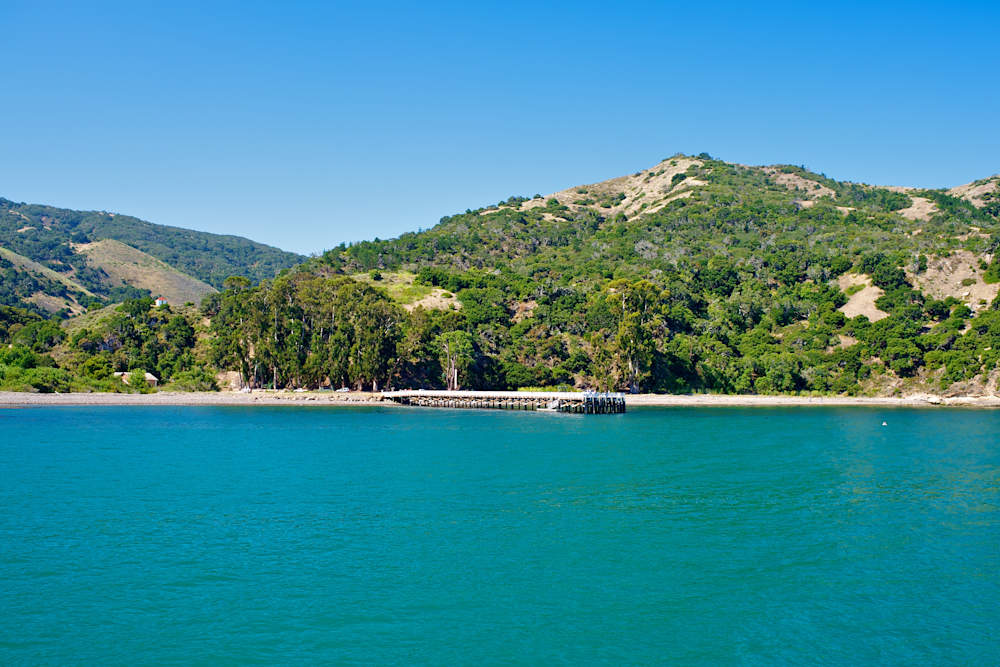
Santa Rosa Island Campground
Santa Rosa Island offers true remote island solitude, though the kit foxes are as bold here as anywhere in the Channel Islands—charming, but keep a close eye on your food. Reviews are sparse, so come with low expectations for amenities and high expectations for wilderness.
Visit Official SitePlanning Your Channel Islands Trip
Best Time to Visit
The Channel Islands are technically a year-round destination, but the experience changes dramatically by season. Here's how to think about it:
- Spring (March–May) is the classic pick. Wildflowers cover the hillsides of Santa Cruz in sheets of coreopsis yellow. Gray whales migrate through the Santa Barbara Channel in March and April—Island Packers runs whale watching crossings alongside the camping ferry runs. Weather is mild, seas are generally calm, and the foxes are active. This is the window most people who know the islands target.
- Summer (June–August) brings reliable weather and the warmest water. The downside is marine layer in the mornings and the highest competition for ferry seats and campsite reservations. Book as far out as RecreationGov allows—sites at Scorpion Ranch fill months ahead in summer. Water visibility for snorkeling is best in late summer.
- Fall (September–October) is the sleeper pick. The marine layer clears, the water is still warm from summer, and the crowds thin noticeably after Labor Day. September and October can produce some of the clearest days of the year on the island—50-mile visibility from the ridgeline, mainland Los Angeles visible on the horizon.
- Winter (November–February) is for the committed. Seas get rough and Island Packers cancels crossings when conditions are unsafe—you can get stranded on the island if weather turns, which is a feature for some campers and a dealbreaker for others. But elephant seals pup on San Miguel in winter, and the islands feel like a different world when you're the only people there.
What to Know Before You Go
A few things that will save you from learning them the hard way:
- Island Packers is your only way out there. Book early. The ferry runs from Ventura Harbor and also from Oxnard. Check the Island Packers website directly for schedules—they're seasonal and vary by island. If your crossing gets cancelled due to weather, they'll reschedule you, but plan for flexibility, especially in winter.
- You carry everything in and out. No trash cans on the island. Pack out every piece of trash. The campground at Scorpion Ranch has a water spigot (treat it or not—most people drink it straight), pit toilets, and metal food storage boxes. Use the boxes. The foxes are adorable and relentless.
- Wind is the variable. Scorpion Anchorage is reasonably sheltered, but the ridgeline is fully exposed. Stakes and guylines matter here more than they do at inland campgrounds. A freestanding tent staked to bare rock in a Channel Islands gale is a memorable and unpleasant experience.
- There are no services on the island. Bring everything—sunscreen, extra food, a repair kit, layers for the temperature swing between afternoon and evening. The camp store exists at Scorpion Ranch but don't count on it for anything critical.
- The foxes are protected. Do not feed them. They'll try everything to get you to, including staring at you with an expression that suggests you are personally responsible for their suffering.
- Campfire rules are strict. Check current fire restrictions before you go. Wood fires are typically prohibited; a camp stove is the play.
Nearby Activities
The island itself provides most of what you need, but here's what to do once you're out there—and what to pair it with on the mainland:
- Scorpion Canyon Loop—The standard intro hike from the campground. Climbs up through chaparral to the ridgeline with views back to the mainland. About 4.5 miles round trip with 700 feet of gain. Do it in the morning before the wind picks up.
- Potato Harbor Trail—Walk west from Scorpion Ranch along the south bluffs to Potato Harbor overlook, one of the most dramatic coastal viewpoints in California. Flat, exposed, and deeply satisfying. About 5 miles out and back.
- Kayaking and snorkeling at Scorpion Cove—The kelp forest just offshore the boat landing is dense and healthy. Rent kayaks and snorkel gear from Channel Islands Adventure Company at the harbor—they handle the gear transport on the ferry. Garibaldi, sheephead, and the occasional bat ray.
- Painted Cave sea cave tour—Book a dedicated tour through Island Packers or paddle there independently if you're an experienced kayaker. The sea conditions around the northwest coast of Santa Cruz can be serious; don't attempt it without checking conditions and having skills to match.
- On the mainland in Ventura—The Ventura Harbor area has solid fish tacos, a handful of good bars, and the Channel Islands National Park Visitor Center, which has a tide pool exhibit and the park's best interpretive displays. Worth a stop before your crossing.
Frequently Asked Questions
How do you get to Channel Islands National Park?
The only way to reach the Channel Islands is by boat or small plane. Island Packers Cruises, based at Ventura Harbor, is the authorized concessionaire for the park and runs regular ferry service to Santa Cruz, Anacapa, Santa Rosa, San Miguel, and Santa Barbara islands. The crossing to Santa Cruz Island takes approximately one hour. Reservations are required and fill up fast, particularly for summer weekends. A small charter air company also provides flights to Santa Rosa, primarily for backpackers.
Is camping on the Channel Islands worth it?
Genuinely, yes—and specifically in a way that's hard to replicate anywhere else in California. The combination of boat-access-only logistics, island-endemic wildlife (the Santa Cruz Island fox will walk right up to you), sea kayaking through Painted Cave, and no light pollution makes for a camping trip that feels categorically different from a park visit. Scorpion Ranch campground on Santa Cruz is the easiest starting point. The effort level is moderate—you carry your gear about half a mile from the boat—and the payoff is a night sky and level of quiet that's increasingly rare in Southern California.
What is Painted Cave at Channel Islands?
Painted Cave is one of the largest sea caves in the world, located on the northwest coast of Santa Cruz Island. The entrance arch stands roughly 160 feet high. The interior walls are covered in oxidized minerals that create bands of red, purple, black, and brown—the source of the name. The cave runs about a quarter mile deep and can be accessed by kayak when seas are calm. Island Packers runs dedicated tours. Access from the main Scorpion Anchorage requires paddling around a significant stretch of exposed coastline, so it's typically done as a separate day trip rather than a solo excursion from camp.
Can you see the Channel Island foxes when camping?
Almost certainly. The Santa Cruz Island fox is endemic to the island and, having evolved without land predators, has no fear of humans. At Scorpion Ranch campground they are a constant presence—investigating camp perimeters at dusk, staking out food storage boxes, and making sustained eye contact until you give them your full attention. They're about the size of a house cat. Do not feed them; it's bad for the population and prohibited. Enjoying them from a distance while they attempt to outwit your bear canister is the intended experience.
What should I pack for a Channel Islands camping trip?
Pack as if there is no resupply, because there isn't one. Water is available at Scorpion Ranch campground (filtered municipal supply—most campers drink it without additional treatment), but bring your own filter as backup. Food, all trash, and any waste beyond what goes in the pit toilets come in and go out with you. Wind is the wildcard: a four-season or well-staked three-season tent is worth it. Layers matter—the temperature spread between afternoon sun and post-sunset can be 30 degrees. Bring a camp stove (wood fires are typically prohibited), sun protection, and a headlamp for the caves. A dry bag for the boat crossing is a good idea if you're prone to gear anxiety.
How far in advance do I need to book Channel Islands camping?
For summer weekends, as far in advance as Recreation.gov allows—typically six months out—and even then Scorpion Ranch fills quickly. Spring and fall weekdays are more attainable with one to two months of lead time. Winter is the easiest window to find availability, though ferry cancellations due to weather are a real factor. Book your ferry through Island Packers separately from your campsite reservation; the two systems don't communicate and you need both confirmed before your trip.
Wildlife Sounds
Observations from iNaturalist