SF Bay Area
By Julian Bialowas & Daniel Tomko·Updated April 2026
The Bay Area shouldn't work as a camping destination. Ten million people, some of the most expensive real estate on Earth, and some of the most congested roads in the country—none of this suggests wilderness. And yet within an hour of San Francisco, you can pitch a tent on a bluff 300 feet above the Pacific, sleep in a cabin where the floor joists shake from wave action below, or camp in old-growth redwoods that were old before California was a state. The Bay Area camping situation is excellent, and most of it goes underappreciated.
Steep Ravine is the number one reservation in the California state parks system and there's no close second. Ten primitive campsites and six cabins perched on a bluff at the base of Mount Tamalpais, overlooking the Pacific. The cabins—small, wood-planked, each with a wood stove and a sleeping platform—sit so close to the ocean that at high tide with any swell, you feel the structure vibrate. There's a trail down to a small cove. On a clear night you can see the lights of the Farallon Islands. Getting a reservation requires refresh-camping on the ReserveCalifornia website the moment the six-month window opens. It is one of the best spots in California.
Point Reyes National Seashore operates four hike-in campgrounds accessible only on foot—Sky, Coast, Glen Camp, and Wildcat. This is backcountry camping with drive-in convenience: you park, hike 3–8 miles, and end up in some of the most dramatic coastal landscape in the state. Wildcat Camp sits on a bluff above the beach with the Alamere Falls waterfall dropping directly onto the sand nearby. The elk herds that roam the Tomales Point corridor are visible from several of the trail approaches.
Angel Island State Park sits in the middle of San Francisco Bay and offers camping that makes no sense given its location. You ferry over from Tiburon or San Francisco, bike or hike to the campground, and look back at the city skyline from your tent. Nine environmental campsites spread around the island's perimeter, each with views of either the Bay, the Golden Gate, or the Marin Headlands. The island's immigration station history adds a layer that makes it more than just a campsite.
Samuel P. Taylor State Park in the Lagunitas Creek canyon brings the redwoods back into the picture. The campground sits under second-growth coast redwoods in the Marin hills, 15 miles from Point Reyes, and functions as a base camp for the whole region. It's one of the few campgrounds near San Francisco with actual shade and creek access.
The Marin Headlands GGNRA campground at Hawk Camp is a walk-in site above the Golden Gate with views that cost thousands of dollars per night at the hotels in the city below. Kirby Cove, at the base of the headlands right at the mouth of the Bay, has sites so close to the bridge that the fog horns will wake you up. This is a feature.
Top Campgrounds Near SF Bay Area

Slide Ranch
Slide Ranch earns its reputation as one of the best campsites within 30 minutes of San Francisco, combining dramatic coastal views and ocean sounds with a working farm full of friendly animals. A few trade-offs to know going in: Highway 1 traffic is audible from some sites, portapotties require a walk, and the strict no-stove policy means cold breakfasts.
Book on Hipcamp
Walden Ranch
Walden Ranch is a genuinely fun, animal-filled property where host Alan sets the tone with a warm welcome, unlimited firewood, and kayaks and paddleboats on the pond—it punches well above its price point. Pack earplugs, though: the roosters, peacocks, and resident hog keep their own noisy schedules around the clock.
Book on Hipcamp
Fern Ridge Flats - Private Camping
Host Matt has put real thought into this redwood site near Aptos—potable water, a composting toilet, a propane fire pit with fuel included, and even a canopy add-on for rainy weekends make it unusually low-friction for a nature setting. At just 15 minutes from town it's an easy entry point for first-timers, yet private and peaceful enough to pull repeat visits.
Book on Hipcamp
Lobitos Creek
Rebecca's Lobitos Creek property delivers rolling-hill views, serious stargazing, and a dog-friendly trail that drops down to Poplar Beach in under 15 minutes—it's the kind of place guests immediately want to keep secret. One practical heads-up: the site gets heavily dew-soaked overnight, so cover electronics and camp chairs before bed, and larger rigs should be cautious on the sharp entry turn.
Book on Hipcamp
Pharo Pharms Organic Farm-
A working organic farm between Napa and Sonoma that doubles as a surprisingly practical base camp — hookups, water, and vineyard views included. It's genuinely rural (narrow road in, farm equipment, roosters at dawn), so come with the right mindset and you'll love it; come expecting a polished campground and the $80+ price tag will sting.
Book on Hipcamp
Audrey Edna Cabin at Alpine Ranch
You have to hike in a few miles to reach this ridge-top cabin in the Santa Cruz Mountains, but reviewers consistently say it's worth every step — two bedrooms, a fully stocked kitchen, games, a guitar, and sweeping sunset views await. Just know you're packing out your own trash, and pack layers because the heat pump handles the cold well but the weather can turn.
Book on Hipcamp
Sleep Up High In A Redwood Tree-net
A giant suspended tree net woven into a cluster of coastal redwoods — it sleeps four comfortably and the twinkle lights make it genuinely romantic or kid-magical depending on your crew. It's not wilderness: you can see houses through the trees and the nearest restroom is an eight-minute walk to a porta-potty, but once you're up in the net, none of that seems to matter.
Book on Hipcamp
Faultline Farm
A flat, private, well-maintained site just minutes from Point Arena and its lighthouse, with a ravine vista that earns high marks for both sunrises and stargazing. Host Patrick is the real differentiator here — multiple reviewers called out his friendliness and local recommendations, and the camp cat Lily apparently seals the deal; just don't rely solely on Google Maps to find it.
Book on Hipcamp
Calistoga Dreaming
Peter's hillside perch above Calistoga punches above its weight with thoughtfully built amenities — the hot outdoor shower gets mentioned in nearly every review — and a host who greets arrivals with fairy lights and local intel. Rigs up to at least 23 feet have made it work, though the one-lane road warrants a heads-up for first-time towers.
Book on Hipcamp
Salmon Creek Ranch
Salmon Creek Ranch earns repeat visits by stacking genuine working-ranch character on top of solid camping basics — creekside platforms, redwood shade, and 400 acres of trails that climb to pastures where you can buy duck eggs and goat sausage straight from the source. The Eagle's Nest Treehouse adds a more polished option for those who want four walls, while the hosts stay reliably hands-on without hovering.
Book on Hipcamp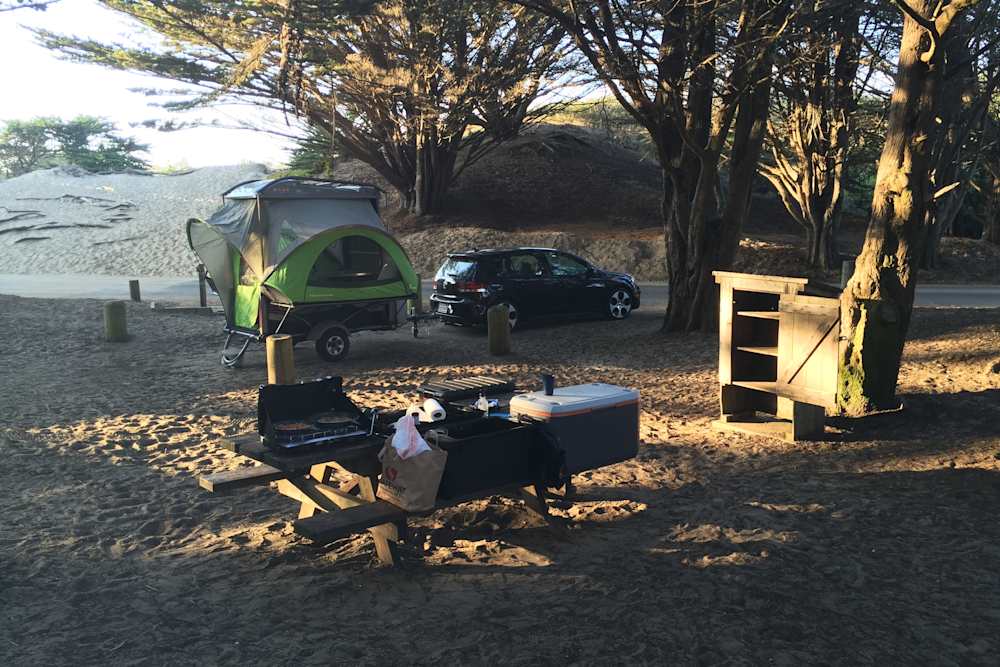
Bodega Dunes Campground
Bodega Dunes is a solid Sonoma Coast base camp with generously spaced sites and the novelty of sleeping on actual sand dunes, but it's a developed state campground with all the trade-offs that implies — noise from neighbors, inconsistently cleaned fire pits, and coastal moisture that will soak anything left outside overnight. Weather is the wildcard: reviewers swing between 'super windy' and genuinely beautiful depending on the day.
Huckleberry Campground
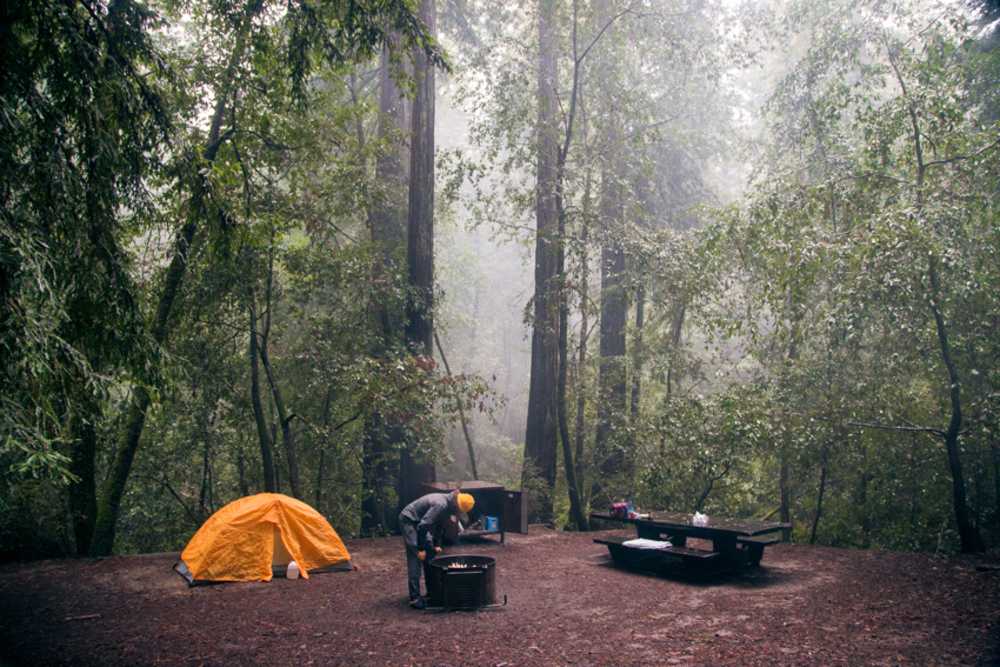
Huckleberry delivers the classic redwoods experience — deep shade, well-spaced sites, clean individual unisex bathrooms, and good hiking — but come prepared for two recurring wildlife complaints: aggressive raccoons and food-raiding jays, so use the provided food lockers. Site 63 gets a specific shout-out for privacy, and walk-in sites reward the extra effort with seclusion and a great stargazing spot nearby.
Visit Official Site
Tomales Bay Campground
Tomales Bay is a special one — the real draw is paddling in by kayak, picking up oysters at Hog Island, and catching bioluminescence at night. Hosts like Tom and Alan go genuinely above and beyond, but plan ahead: kayak rentals sell out fast and permits require an early start.
Visit Official Site
Steep Ravine Cabins and Campground
Steep Ravine is about as close to a perfect coastal perch as California offers — ocean views from every cabin, waves to fall asleep to, and real wildlife like whales and dolphins just offshore. No running water or electricity in the cabins, so pack accordingly, and know that reservations are genuinely hard to get.
Visit Official Site
Pinnacles Campground
Pinnacles is a legitimately underrated park — the caves and geological formations are unique, and the dark skies make it a standout for stargazing and meteor showers. Get to the high trails early in the morning for your best shot at spotting a California Condor, and keep your food locked up from the bold raccoons.
Visit Official SitePlanning Your SF Bay Area Trip
Best Time to Visit
September through November is the best camping window for the Bay Area, and it's not particularly close. This is when the summer marine layer clears, the coastal bluffs get warm afternoon sun, and the hills are dry and golden. Point Reyes gets the least fog of the year. The Marin Headlands are clear enough for views that stretch to the Farallon Islands. Temperatures hit 65–75°F in the afternoons. Reserve well ahead—this is also when everyone else figures out it's nice.
March through May brings green hills, wildflowers on the headlands, and dramatic coastal light. The marine layer is manageable. This is the best time for Point Reyes hiking—the trails aren't as muddy as winter, the lupine and poppy are in bloom, and the tule elk are calving. Steep Ravine is atmospheric in the spring fog.
Summer (June–August) is foggy and cold on the coast—Mark Twain's apocryphal quote about the coldest winter he ever spent applies directly to Steep Ravine in July. The Marin Headlands in June can be 50°F and socked in by noon. If you're doing summer, camp at Samuel P. Taylor or Angel Island where the microclimates are more forgiving.
Winter camping is for the committed. Steep Ravine in a winter storm is atmospheric and the cabins are warm, but the tent sites are exposed. Point Reyes trails flood. Samuel P. Taylor stays reasonable. The payoff: zero competition for reservations and dramatic stormy light on the coast.
What to Know Before You Go
Getting a Steep Ravine reservation: This is its own skill. Sites and cabins release exactly six months in advance at 8am Pacific on ReserveCalifornia. The cabins go in under two minutes. Set a phone alarm, have your payment info saved, know which specific sites you want (cabins T1–T6, tent sites 1–10), and refresh aggressively at 7:59am. Cancellation alerts are also worth monitoring—reschedules happen and spots open unexpectedly. Do not show up without a reservation.
Point Reyes permits: Hike-in campsites at Point Reyes require a reservation through Recreation.gov. The trailhead parking lots fill early on weekends; consider arriving before 8am or using the shuttle from Bear Valley Visitor Center. All four campgrounds require a fire permit and provide food storage lockers—use them, the ravens are opportunistic and bold.
Angel Island ferries: Blue and Gold Fleet runs from San Francisco's Pier 41; Angel Island Ferry runs from Tiburon. Check schedules carefully—the last ferry back in the evening is early, and missing it is memorable. Bikes are allowed on the ferry and the island has 12 miles of road and trail.
Fog: The Bay Area coast is cold in summer. Sleeping bags rated to 35°F are appropriate even in August at Steep Ravine and Kirby Cove. The Marin Headlands routinely see temperatures 20°F cooler than downtown San Francisco on summer afternoons.
Wildlife: Point Reyes has tule elk, bobcats, and coyotes regularly visible from trail. The whale migration passes Point Reyes December through April—the lighthouse is the best land-based whale watching spot in Northern California. Harbor seals pup at Drakes Beach in spring.
Leave No Trace urgency: All these sites are heavily used and under constant pressure. The Marin Headlands GGNRA sites in particular need campers who take LNT seriously—campfire restrictions are frequent, and the headlands vegetation is slow to recover from impact.
Nearby Activities
The Dipsea Trail: One of the most legendary trail runs in California, the Dipsea connects Mill Valley to Stinson Beach in 7.4 miles of punishing, beautiful ridge and coastal hiking. Running or hiking it from the Marin side with a camp at Steep Ravine at the end is a perfect two-day trip.
Point Reyes Lighthouse: The lighthouse sits at the windiest point on the Pacific Coast and looks directly into the California Current—December through April it's the best land-based gray whale watching in the state. The 308-step descent to the lighthouse is worth it. Arrive early; the parking lot fills by 9am on weekends.
Limantour Beach: Point Reyes's most accessible beach—a long, undeveloped Pacific strand backed by dunes with almost no development in sight. The water is cold and the surf can be rough, but it's one of the most beautiful beaches in Northern California and only 45 minutes from San Francisco.
Muir Woods National Monument: The old-growth coast redwood grove in Mill Valley is 12 miles from Steep Ravine and requires a timed entry permit to visit (book through Recreation.gov). Cathedral Grove has trees over 250 feet tall. Pair it with an evening at Steep Ravine for the quintessential Marin two-day experience.
Tomales Bay kayaking: The protected waters of Tomales Bay between Point Reyes and the Marin mainland are ideal for kayaking—calm, tidal, lined with oyster farms, and terminally scenic. Blue Waters Kayaking in Marshall rents boats and runs guided tours. The oyster farm stops are worth building a trip around.
Mount Tamalpais: The 2,571-foot summit of Tam has views of the Bay, the Pacific, and on clear days the Central Valley and the Sierra. The East Peak summit loop is 4 miles round-trip. The mountain's trail network—over 200 miles of it—is the best urban-adjacent hiking in California.
Frequently Asked Questions
How do you get a Steep Ravine reservation?
Steep Ravine cabins and campsites release on ReserveCalifornia exactly six months in advance at 8am Pacific time. The six cabins (T1–T6) sell out in under two minutes. Create a ReserveCalifornia account, save your payment info, know exactly which site you want, and be on the site refreshing at 7:59am on the day the window opens. Cancellation monitoring—watching for released reservations—is the other route. There are browser extensions and third-party services that alert you to cancellations. Do not attempt to walk in without a reservation.
Can you camp at Point Reyes National Seashore?
Yes—four hike-in campgrounds (Coast, Sky, Glen, and Wildcat) require you to walk 3–8 miles from the trailhead but reward you with coastal bluff and forest sites that feel remote. Reservations through Recreation.gov are required. Wildcat Camp near Alamere Falls is the most dramatic site. Group camping is also available at the Environmental Camps.
Is Angel Island camping worth it?
Yes. Camping on Angel Island with the San Francisco skyline behind you is a surreal and excellent experience. The nine environmental sites are distributed around the island with bay and bridge views. You access the island by ferry from Tiburon or San Francisco—book ferry and campsite simultaneously. Bring bikes if you can; the island perimeter road is perfect for a morning loop.
What campgrounds are near Muir Woods?
Steep Ravine is the closest developed campground to Muir Woods, about 12 miles away along the coast at Mount Tamalpais State Park. Samuel P. Taylor State Park in the Lagunitas Creek canyon is 20 miles away and has the most similar forest character. Neither is walk-in from Muir Woods itself—you'll need a car.
Is the Marin Headlands good for camping?
The Marin Headlands GGNRA campsites are some of the most scenically situated campgrounds anywhere in the country. Hawk Camp (walk-in, 3 miles) sits on a ridge above the Golden Gate with 360-degree views. Kirby Cove (reservations required, short walk-in) is directly at the Bay mouth with the Golden Gate Bridge overhead. Both are managed by the Golden Gate National Recreation Area; book through Recreation.gov.
What is the best time of year to camp at Point Reyes?
September through November is the best overall window—fog clears, temperatures are mild, and the coastal light is exceptional. March through May is excellent for wildflowers and newborn tule elk. Avoid summer if you dislike fog and cold; the Point Reyes headlands in July average 55°F with near-constant marine layer. Winter is wet but dramatic, with whale migration passing the lighthouse December through April.
Wildlife Sounds
Observations from iNaturalist