Eastern Sierra
By Julian Bialowas & Daniel Tomko·Updated April 2026
Highway 395 runs the length of the Eastern Sierra from Topaz Lake in the north to Mojave in the south, and it is the best road trip in California that most people have never taken. The western side of the road gives you the Sierra Nevada crest rising 10,000 feet off the Owens Valley floor—an escarpment so abrupt and enormous it looks geologically impossible. The eastern side gives you the Great Basin rolling out toward Nevada. In between: hot springs, volcanic craters, ancient lakes, trout streams, and more campgrounds than you can visit in a summer.
Mammoth Lakes anchors the middle of the corridor. It's a ski resort town that transforms in summer into one of the best basecamp towns in the American West—direct access to the John Muir Wilderness, Devils Postpile National Monument, and a ring of alpine lakes accessible on a single tank of gas. The campgrounds around Mammoth fill fast, but there are dozens of them, and the Forest Service manages enough sites to absorb what Yosemite turns away.
Twenty miles north, the June Lake Loop is one of the Sierra's best-kept secrets. Four glacially carved lakes—Grant, Silver, Gull, and June—sit in a tight volcanic canyon, ringed by campgrounds that feel quieter than anything you'll find at Mammoth. The loop road is only 16 miles long and you can camp a different lake each night if you plan it right.
Convict Lake sits just south of Mammoth in a glacier-carved cirque so dramatic it looks staged. The campground is right at the water's edge. Mono Lake, to the north, is something else entirely—a million-year-old saltwater lake with calcium carbonate tufa towers rising from the shallows, a geological and ecological oddity that stops people in their tracks. And scattered throughout the corridor, natural hot springs—Benton Hot Springs, the Hot Creek Geological Site outside Mammoth, Wild Willy's near Bishop—mean you can soak under the stars after a long day on the trail.
Top Campgrounds Near Eastern Sierra

Five Fours Camp in Three Rivers
Brewster's property just outside the Sequoia entrance punches well above its price point — the outdoor shower, hammock, and deck view of Moro Rock are genuine highlights, not afterthoughts. Brewster himself is the real differentiator: he stays up late to greet arrivals, gives trail advice, and keeps the facilities genuinely clean (the occasional mouse in the bathroom notwithstanding).
Book on Hipcamp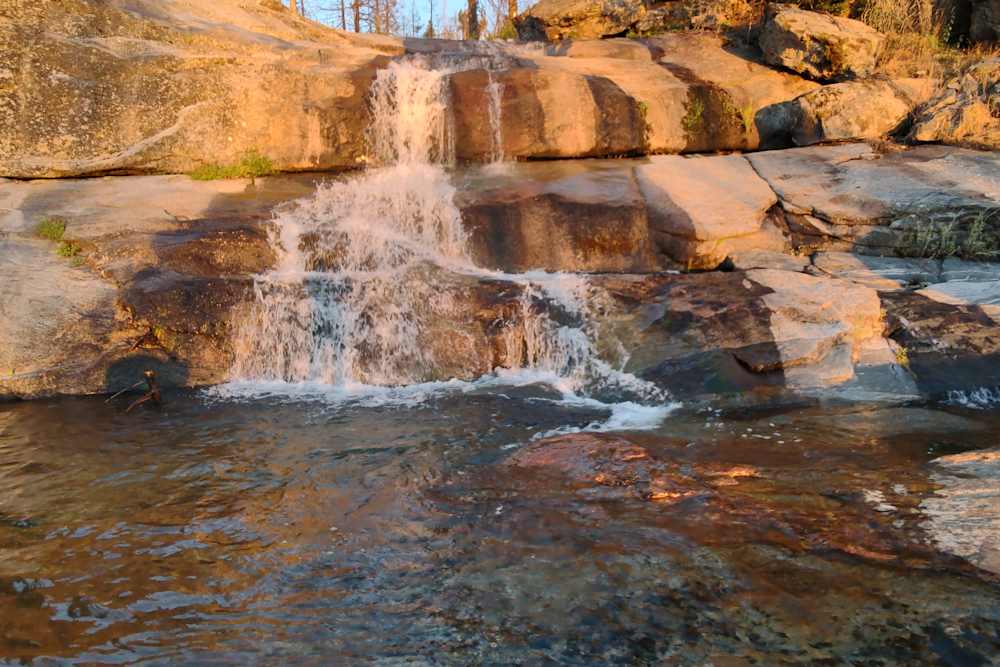
Musick Creek Falls by Shaver Lake
Musick Creek Falls is a legitimately stunning piece of land — swimming in natural pools beneath a waterfall and watching stars from camp is the real deal — but go in with eyes open: the falls can be loud enough to make conversation difficult, the road to Musick Cove requires decent clearance, and the upper site has line-of-sight down to yours. Hosts Shandie and Jesse are exceptionally attentive, delivering firewood and giving spot-on local recommendations.
Book on Hipcamp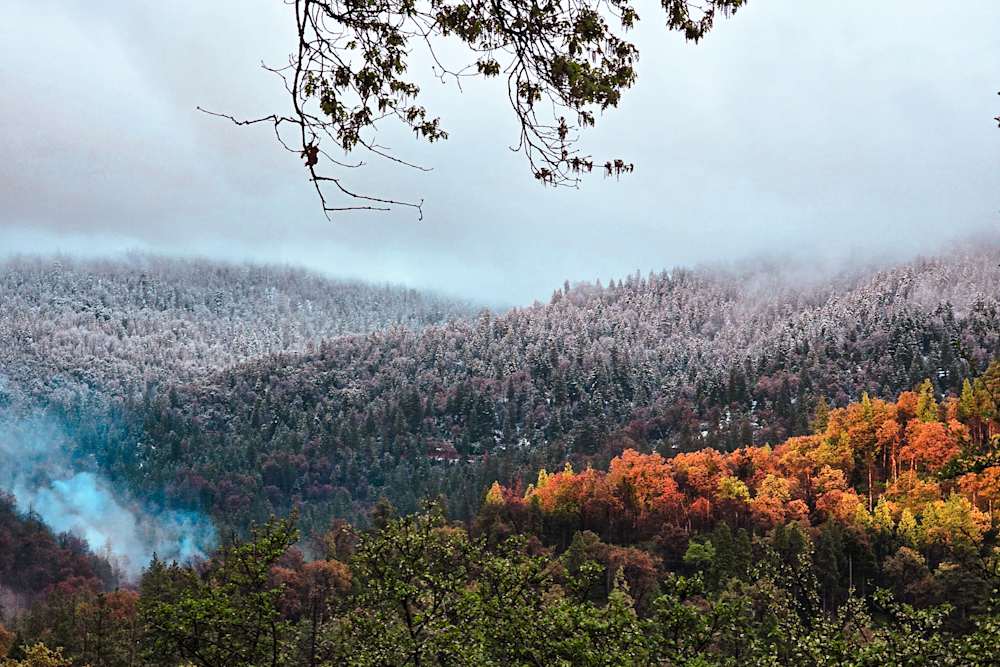
Thistledew Ranch
Thistledew Ranch is the rare private site that genuinely delivers solitude — one site, no neighbors in view, crickets as your only soundtrack — while quietly offering electric hookups and potable water that most off-grid spots don't bother with. Follow the host's directions on the approach road; the alternate route is reportedly rough.
Book on Hipcamp
Squirrel Rock RV Campground
Julie has put real thought into every detail here — Edison string lights tucked into the rocks, a clean BBQ with pavers underneath, Uno and Yahtzee in the game box, water and electric hookups — and it shows in the consistently glowing reviews from families and couples alike. The bonus is location: you can walk to Columbia State Park and easily day-trip to Yosemite, Jamestown, or Murphys.
Book on Hipcamp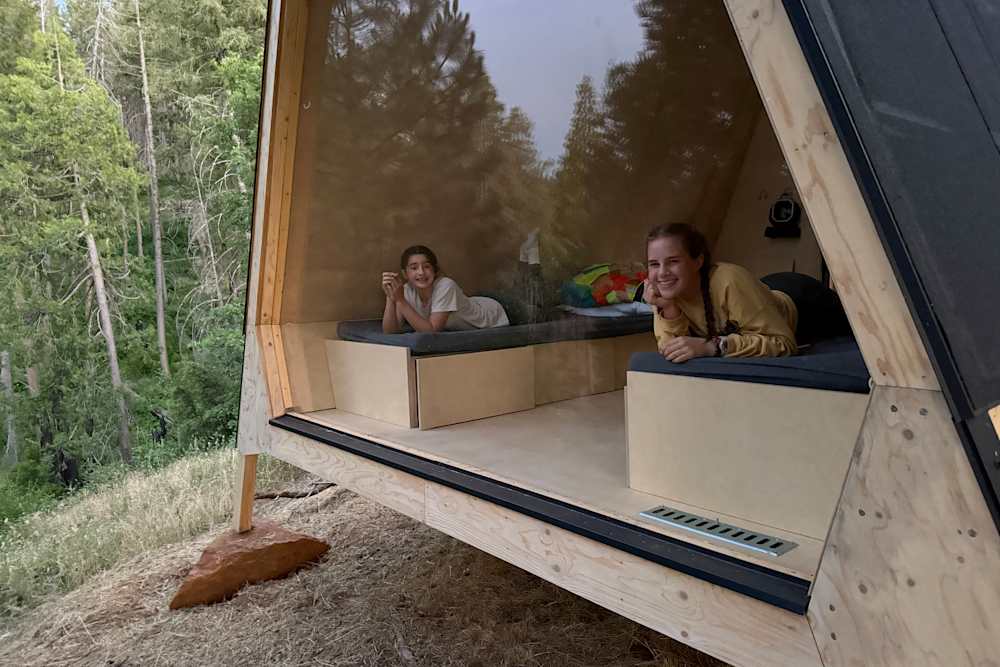
Nolla A-Frames Near Yosemite
These solar-powered A-frames near Groveland hit a sweet spot between modern comfort and genuine disconnection — expect zero cell service, east-facing sunrise views through a massive glass wall, and stargazing from your bed. Just know that summer heat builds up inside (the solar inverter runs warm and ventilation is limited), so shoulder-season visits are the move.
Book on Hipcamp
Yosemite Colfax Spring
Liza and Tom's tent sites deliver genuinely breathtaking valley views, hotel-quality showers, and a waterfall that doubles as a natural sound machine at night — a rare combo for a campground this close to Yosemite. The one real caveat: most sites have little to no shade, so bring a pop-up canopy if you're camping in summer.
Book on Hipcamp
Moro Rock View
Joe's detached studio sits four miles from the Sequoia entrance and punches well above its price point — the kitchenette is stocked with coffee, water pressure is solid, and Joe himself hands out genuinely useful local tips on dining and park timing. It feels private rather than like a converted garage, and past guests consistently note they'd come back for a longer stay.
Book on Hipcamp
Hidden Falls Yosemite Camp
Wendy and Hudson's property offers a genuinely secluded cabin (and a separate tent site) perched above a waterfall and creek, about 30 minutes from Yosemite's southern entrance — the deck is positioned so you hear and see the falls directly. Heads up: the parking driveway is steep enough that AWD is helpful, and the bathroom is a bit of a walk from the cabin.
Book on Hipcamp
Camping At Yosemite's Doorstep
A genuinely well-equipped private site about 6 miles from Yosemite's entrance, with hot-water showers, bear box, firewood, and string lights already set up for you — host Jim is responsive and the gas station across the street is a real safety net. Fair warning: hover flies and mosquitoes can be aggressive around food, and the property occasionally gets used as a turnaround by passing drivers, so it's not quite wilderness-solitude.
Book on Hipcamp
Shangrilog Near Yosemite
A casual, family-friendly stopover near Yosemite where host Matthew shows up in person, hands over firewood, and points you toward the zip line, tree house, and little creek running through the site — it punches well above its price for kids roughly 5–12. Yes, the road is close and there's no bathroom, but multiple families report neither was a dealbreaker once they were settled in.
Book on Hipcamp
Upper Pines Campground
Upper Pines is the quintessential valley-floor basecamp — bear boxes, bathrooms, and steps-away access to Happy Isles — but you're trading solitude for convenience, and crowds come with the territory. October visitors should pack seriously warm layers, as it gets cold fast once you're out of the sun.
Visit Official Site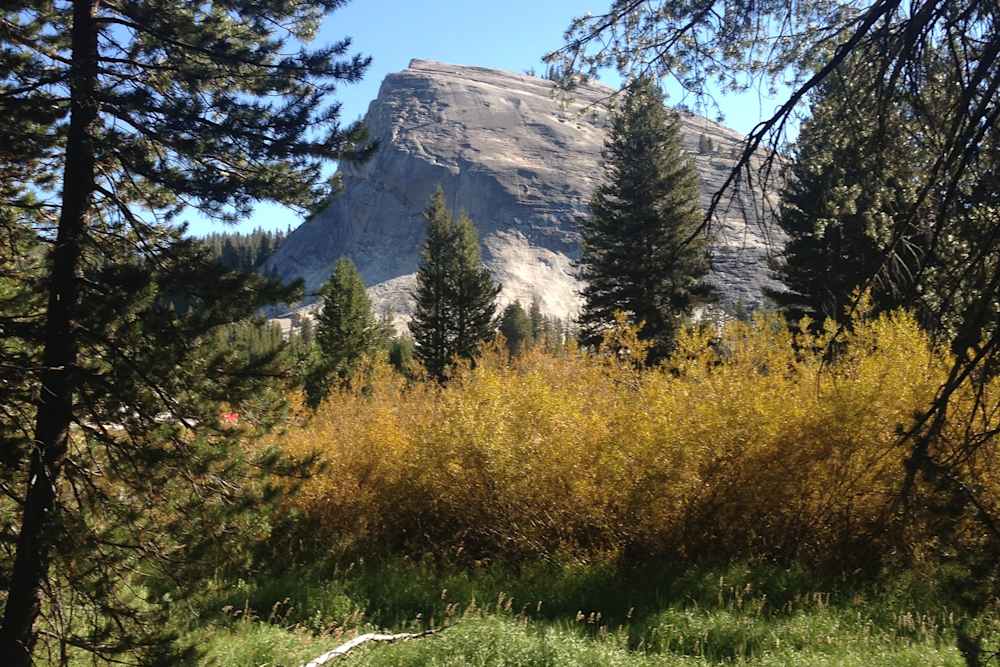
Tuolumne Meadows Walk-In Campground
Tuolumne Meadows Walk-In sits behind the A loop and draws a self-selecting crowd of backpackers and early-rising hikers rather than party campers — the bears here are described as 'quiet, clever, and like spaghetti,' so treat your food storage seriously. It fills fast in summer but first-come arrivals in the morning usually land a spot, and the meadows, river, and that short scramble to a Half Dome viewpoint make the effort worthwhile.
Visit Official Site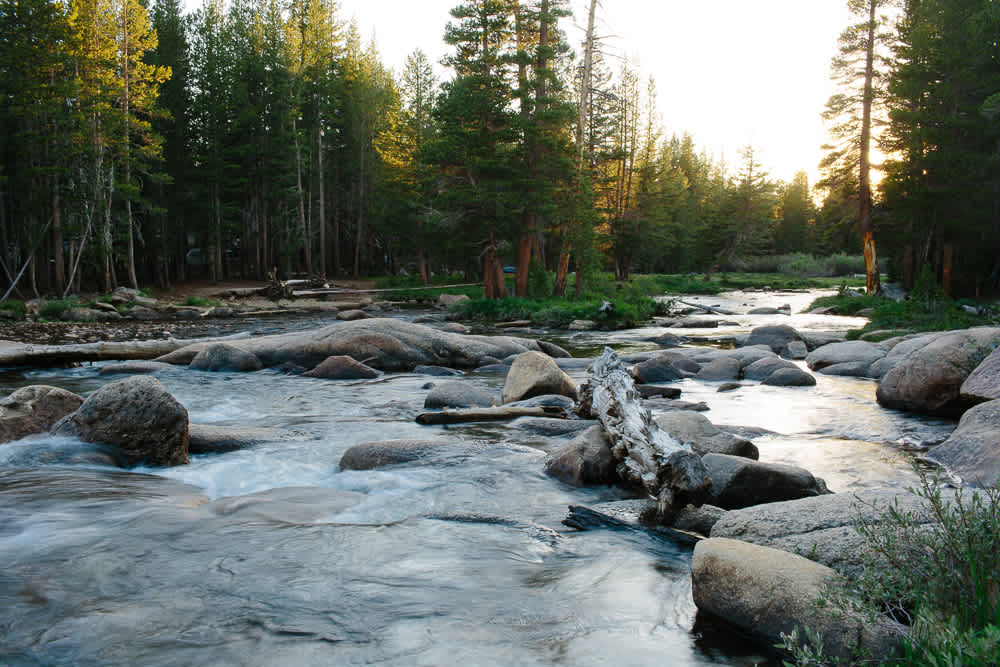
Tuolumne Meadows Campground
Tuolumne Meadows sits at high elevation and rewards visitors with trail access to places like Cathedral Lakes and Elizabeth Lake, plus a quieter vibe than the Valley. The recent renovation brought new tables, fire rings, and bear bins, but skip expecting fully stocked restrooms — reviewers noted no soap or lights in the bathrooms, and some sites are frustratingly sloped, so bring leveling blocks if you're in a rig.
Visit Official Site
Lodgepole Campground
Lodgepole is a well-maintained campground inside Sequoia with a genuinely great perk: the Tokopah Falls trailhead starts right inside the campground, and the Roaring River runs alongside it. Summer crowds are real, and one reviewer warned about aggressive ground wasps at their August campsite, so keep that in mind when planning meals.
Visit Official Site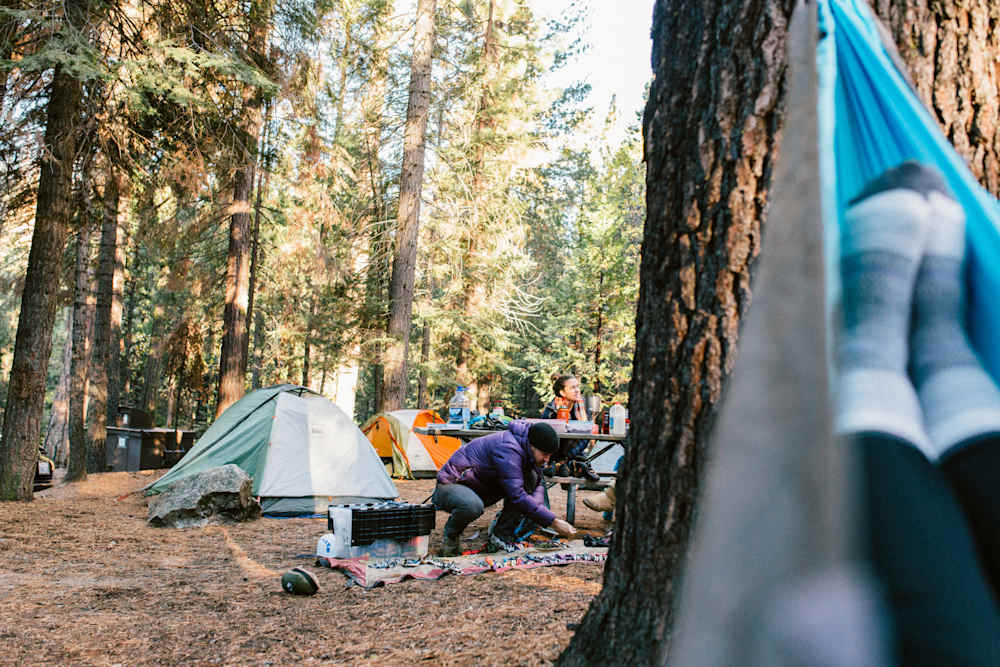
Hodgdon Meadow Campground
Hodgdon Meadow is a solid Yosemite base camp near the park entrance — the big practical win is that staying here means you don't need a separate vehicle reservation to enter the park, which is a genuine stress-saver. Sites are close together and the terrain is hilly, so tent campers should scout for flat ground, but a 26-foot trailer fit fine for at least one reviewer who grabbed a level spot.
Visit Official SitePlanning Your Eastern Sierra Trip
Best Time to Visit
Late June through early September is the core season. Roads into the high country open as snowpack melts—usually late May to mid-June depending on the year—and campgrounds at elevation are accessible by late June in most years. July and August are warm and busy but not oppressive at altitude; daytime highs around Mammoth Lakes average in the low 70s.
Late September and October are spectacular and underappreciated. Aspens around the June Lake Loop and the Bishop Creek drainage turn gold, the summer crowds are gone, and the air is crisp and clear. This is the window serious photographers show up for. Nights drop to freezing at elevation, but days are often perfect. Some campgrounds close after Labor Day, so check ahead.
May and early June work well for the lower-elevation sites around Bishop and the Owens Valley, where the Sierra crest views are best and wildflowers fill the valley floor. High-country campgrounds are still snowed in, but hot springs, Mono Lake, and the lower trailheads are all accessible.
Winter camping along 395 is possible for experienced cold-weather campers—the views of the snow-covered crest are extraordinary—but many campgrounds close and the roads can ice without warning. Check Caltrans before any trip between November and April.
What to Know Before You Go
Altitude. Most Eastern Sierra campgrounds sit between 7,000 and 9,000 feet. Mammoth Lakes is at 7,880 feet. If you're driving up from Los Angeles or the Bay Area in a day and jumping straight into strenuous hiking, you will feel it. Plan a lower-key first day, drink aggressively, and take altitude headaches seriously. If symptoms are severe, descend.
The Owens Valley view. The single most dramatic overlook on Highway 395 is the Alabama Hills outside Lone Pine, looking west at Mount Whitney and the Sierra crest. Whitney is the highest point in the contiguous United States at 14,505 feet, and from the valley floor you're at 3,700 feet—an 11,000-foot wall of rock filling the western sky. Camp at Whitney Portal or in the Alabama Hills dispersed camping area and this is your morning view.
Hot Creek safety. Hot Creek Geological Site outside Mammoth is a river fed by geothermal springs—the water temperature swings wildly and unpredictably, and swimming has been banned since 2006 following injuries. You can walk to the overlook and watch the steam and turquoise water, but don't get in. Benton Hot Springs, about an hour east of Bishop near the Nevada border, is a legal, properly managed hot spring experience with soaking tubs and primitive camping on private land—reservations required.
John Muir Wilderness permits. Trailheads in the Inyo National Forest require wilderness permits for overnight stays, and the popular east-side entries to the JMT fill quota early. Kearsarge Pass, Bishop Pass, and the Mammoth area trailheads all operate under the quota system. Book on Recreation.gov when the season opens in April.
Cell service. Spotty throughout the corridor. Mammoth Lakes has reasonable coverage. The stretch between Bridgeport and Lone Pine has long dead zones. Download offline maps before you leave, and let someone know your itinerary.
Mono Lake. The lake is heavily alkaline—you'll float like a cork if you swim in it, and you should, it's one of the strangest sensory experiences available in California. Rinse off thoroughly after; the water will dry into a white crust on your skin. The South Tufa area has the densest tufa towers and is accessible on a short interpretive trail. Go at sunrise or sunset when the light turns the formations orange and the lake looks like another planet.
Beyond Forest Service campgrounds: The Eastern Sierra has some of the best dispersed camping in California, but if you want something between a bare BLM pullout and a full-service campground, Hipcamp lists private properties along the 395 corridor—ranches near Bishop, properties with hot spring access near Bridgeport, and rural sites near Mammoth Lakes that don't appear in the Recreation.gov system. Some have amenities the Forest Service can't offer. Worth checking before you default to dispersed camping, especially if you're traveling with someone who prefers a guaranteed flat site and a bathroom.
Nearby Activities
June Lake Loop. Take Highway 158 off 395 and drive the 16-mile loop through June, Gull, Silver, and Grant Lakes. Each lake has its own character—June Lake has a small town with a brewery, Silver Lake has a resort store and boat rentals, Grant Lake is the largest and most exposed. The loop takes about 45 minutes to drive; plan to spend a day or more. The hike to Reversed Peak above Silver Lake is four miles round trip with views back to the loop and across to Mammoth Mountain.
Convict Lake. The three-mile trail around the perimeter of Convict Lake gains almost no elevation and delivers constant views of the cirque walls rising 2,000 feet above the water. Fishing is excellent—brook and rainbow trout, with a boat rental operation at the north end of the lake. The campground is right on the water and books fast for summer weekends.
Mono Lake South Tufa. Bring rubber sandals if you want to walk through the shallows. The tufa towers formed underwater as calcium-rich spring water met the alkaline lake—the towers you see above water were exposed after water diversions lowered the lake level in the mid-20th century. A court victory in the 1990s is slowly restoring the lake level. The Mono Lake Committee visitor center in Lee Vining has the best explanation of the history and geology.
Devils Postpile National Monument. A short drive from Mammoth via the mandatory shuttle, Devils Postpile is a 60-foot wall of perfectly hexagonal basalt columns formed by volcanic cooling. The monument is small—you can walk the main trail in under two hours—but the geology is arresting. Rainbow Falls, a 101-foot waterfall a mile down the trail, is the other reason to make the trip.
Bishop Creek Canyon. South Fork, Middle Fork, North Fork—three drainages leading into the John Muir Wilderness with dozens of lakes and the best trout fishing on the east side. The North Fork leads to Lake Sabrina and South Lake, two high-altitude reservoir-turned-alpine-lakes with stunning glacier-carved scenery. Day hikers and backcountry packers share the trailheads; come early.
Benton Hot Springs. About an hour east of Bishop on Highway 6 toward Nevada, Benton is a small historic mining town with a working hot springs on a private ranch. Soaking tubs are fed by natural springs, and primitive camping is available on the property by reservation. It's the most civilized way to experience the geothermal activity that runs throughout the Eastern Sierra—no hiking required, bring a bottle of wine.
Frequently Asked Questions
What is the best way to road trip Highway 395 through the Eastern Sierra?
Drive it north to south if you're coming from the Bay Area, south to north from LA—the Sierra crest view is on your right either way, which is where you want it. The core stretch is Bridgeport to Lone Pine, about 150 miles. Plan at least three days to do it justice: a night around Bridgeport or the June Lake area, a night at or near Mammoth Lakes, and a night in the Bishop area. That gives you time to side-trip the June Lake Loop, hit the Mono Lake tufa towers, and get into Bishop Creek Canyon without rushing. The drive itself takes about four hours without stops, but you'll stop constantly.
Are there campgrounds near Mammoth Lakes that don't require advance reservations?
Yes, though they require flexibility. The Inyo National Forest has a number of first-come, first-served campgrounds in the Mammoth area, including some sites at Convict Lake and along the Mammoth Lakes Basin roads. Arrive on a weekday, and midweek sites are often available even in summer. The Owens River headwaters area and Crowley Lake vicinity also have dispersed camping options outside the reservation system. Check the Inyo National Forest website for current availability maps before making the drive.
Can you swim at Hot Creek near Mammoth?
No—swimming at Hot Creek Geological Site has been prohibited since 2006 after several visitors were seriously burned by sudden temperature surges from underwater vents. The water looks inviting and some sections are comfortable, but the thermal activity is unpredictable and portions of the river can approach boiling without warning. The site is still worth visiting as a walk-around overlook. If you want to actually soak in Eastern Sierra geothermal water, Benton Hot Springs (about an hour east) is the managed, legal option with proper facilities.
What are the tufa towers at Mono Lake and how do I see them?
Tufa towers are calcium carbonate formations—essentially rocky spires—that grew underwater where freshwater springs met Mono Lake's highly alkaline water. They were exposed when water diversions lowered the lake level by 45 feet between the 1940s and 1990s. The South Tufa area, off Highway 395 south of Lee Vining, has the most accessible and most dramatic formations, with a one-mile interpretive trail that puts you right among them. Go at sunrise or golden hour—the low-angle light makes the formations look extraordinary. Admission is $3 per person, managed by the Inyo National Forest.
When do the aspens change color in the Eastern Sierra?
Peak fall color in the Eastern Sierra typically runs from late September through mid-October, depending on the year. The June Lake Loop is the most famous aspen destination—the canyon walls go yellow and orange in a way that's hard to believe. Bishop Creek Canyon's North Fork and the Convict Lake area are also exceptional. Color-tracking websites like Sierra Nevada fall color trackers (and the Eastern Sierra Visitor Center's social media) post weekly updates as the season progresses. Weekends during peak color are crowded; midweek visits are significantly calmer.
Do I need a permit to camp in the Eastern Sierra?
It depends on where you're camping. Developed Forest Service campgrounds (Mammoth Lakes Basin, Convict Lake, Bishop Creek) work on a standard reservation system through Recreation.gov, with some first-come, first-served sites. Overnight backcountry trips into the John Muir Wilderness or Ansel Adams Wilderness require a quota-based permit—reserve through Recreation.gov starting in April for the season ahead. Popular east-side trailheads like Kearsarge Pass and Bishop Pass fill quota on peak summer weekends. Day hikes require no permit. Dispersed camping outside designated campgrounds is allowed in many Inyo National Forest areas—check the specific ranger district rules for the area you're targeting.
Wildlife Sounds
Observations from iNaturalist