Pinnacles
By Julian Bialowas & Daniel Tomko·Updated April 2026
Pinnacles National Park has a swimming pool. That's the opening line because it's the detail that cuts through every preconception people bring to it. The Pinnacles Campground—the only campground in the park, on the east side—has a seasonal outdoor pool that's open from roughly April through October. You can hike eight miles through volcanic rock formations and talus caves, watch California condors circle overhead on thermals, and then cool off in a proper pool with your feet up. No other national park in America offers this. Strange? Yes. Great? Also yes.
The park itself sits at the southern end of the Diablo Range in San Benito County, about 2.5 hours from both Los Angeles and San Francisco—a geographic sweet spot that makes it a realistic long weekend from either city. Despite this, it draws a fraction of the crowds that Yosemite or Big Sur pulls. The NPS added it to the national park system in 2013 (it was a national monument before that), but the visitor numbers have climbed slowly. If you've never heard of it, that's fine—most people haven't. That's the point.
The geology here is unusual. The Pinnacles formations are the remnants of an ancient volcano that formed roughly 200 miles to the south, near what is now the Lancaster area of Los Angeles County, then migrated north along the San Andreas Fault over 23 million years. The result is a compact landscape of jagged rhyolite spires rising 1,200 feet above the valley floor, worn into surreal shapes by millions of years of erosion. Walking among them feels like a set designer's approximation of an alien planet—but better, because it's real.
The talus caves—Bear Gulch Cave and Balconies Cave—are what make Pinnacles singular. These aren't caverns carved by water through limestone; they're rock scrambles, formed by giant boulders wedged into canyon slots. You need a headlamp. You squeeze through passages, climb over boulders, and emerge blinking into light on the other side. Bear Gulch Cave is sometimes closed in spring and early summer to protect a roosting colony of Townsend's big-eared bats that use the upper reaches. Check current conditions before you commit to a specific route.
And then there are the condors. California condors, the largest land bird in North America with a wingspan that can exceed nine feet, were functionally extinct in the wild by 1987—all 27 remaining birds were captured for captive breeding. The recovery program, centered partly at Pinnacles, has brought the wild population back to over 300. On any given day at Pinnacles, you may see a dozen condors riding thermals above the High Peaks. Their size from below is difficult to process—the wingspan-to-body ratio looks wrong, like something assembled from mismatched parts. They soar without effort for hours. Watching them is one of the authentic wildlife spectacles left in California.
Top Campgrounds Near Pinnacles

Country Serenity With Resort Flare
Lisa and Scott have built something genuinely rare: a working farm with goats and mountain views that somehow also has a heated pool, hot tub, outdoor kitchen, pickleball, and a trampoline—all well-stocked and maintained. Hosts go well out of their way, from meeting late arrivals in the dark to bringing over a fire pit, making this feel less like a campsite rental and more like staying with generous friends.
Book on Hipcamp
40min to Pinn/Song of the Ancients
Song of the Ancients earns its name—Veronica's oak-covered property offers genuinely dark skies for stargazing, a solid jumping-off point for Pinnacles, and a host who'll share real knowledge about California Blue Oak conservation rather than just hand you a map. The shower has 'personality,' but reviewers consistently say it's exactly what you need after a dusty hike.
Book on Hipcamp
Two miles from Pinnacles Nat. Park
Sitting just two miles from Pinnacles' west gate—essentially unheard of for car camping near this remote park—this vineyard-backed site delivers 360-degree views, quiet privacy, and staff who welcome guests like family and walk them through the winery's history. Arrive before sunset; reviewers are emphatic that you won't want to miss it.
Book on Hipcamp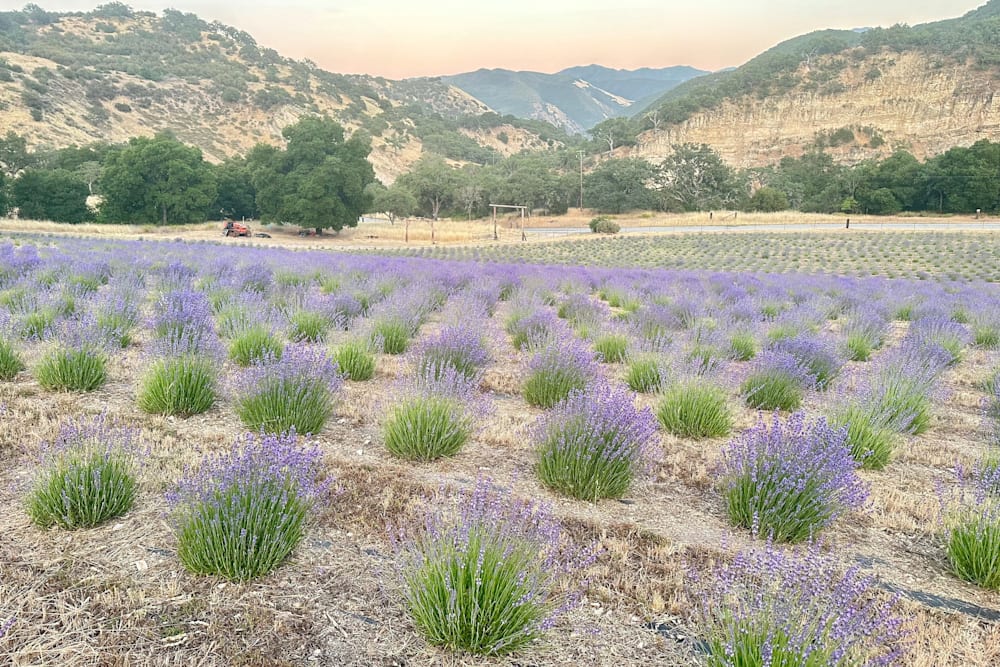
Lavender Creek Camp
Lavender Creek Camp punches above its weight for anyone traveling with dogs—a large, shaded site with a real creek running alongside it, minimal road noise, and nearly zero light pollution at night. Host Ryan is communicative and easy to work with, and the west-side Pinnacles access is a genuine bonus.
Book on Hipcamp
Nearby Getaway -Dogs Welcome!
Nancy is the real draw here — she's the kind of host who meets you on the road, sends handwritten recommendation lists, and drives around the neighborhood helping find your escaped dogs. The fully fenced property is a genuine off-leash paradise, with Hannah the horse and Daisy the donkey as bonus attractions, though if you're booking an indoor room, know that the Grooms and Bridal rooms share sound and light.
Book on Hipcamp
Pinnacles Campground
Pinnacles is a genuinely underrated park best visited in cooler months, with dark skies that reward stargazers and meteor-shower hunters — just lock down your food, because the raccoons here are bold and experienced. Condor spotting is hit or miss, but heading up the mountain early in the morning gives you the best shot.
Visit Official SitePlanning Your Pinnacles Trip
Best Time to Visit
Pinnacles has two good windows and one season to avoid. Plan accordingly:
- Spring (February–May) is the primary season. February and March bring wildflowers to the valley and mild temperatures in the 60s. The condors are active. The caves are accessible (bear in mind Bear Gulch upper cave closes when the bat colony is roosting—typically April through mid-July, though it varies year to year). The pool isn't open yet, but the hiking conditions are ideal. This is when serious hikers come.
- Fall (September–November) is the other window. Temperatures drop back into a reasonable range after the summer heat breaks. The pool is still open through October. Condor activity is high. Crowds are lighter than spring. October is arguably the single best month to be at Pinnacles.
- Summer (June–August) is the caution window. Temperatures in the Pinnacles bowl regularly hit 100°F, and the exposed rock absorbs and radiates heat in a way that makes the High Peaks trail feel punishing by midmorning. The pool is open, which offsets this if you plan around it—early morning hike, afternoon pool, short evening walk is a defensible summer itinerary. But the summer heat is real and not to be dismissed for a first visit.
- Winter (December–January) is underrated. Cool temps, very low crowds, and clear skies that can stretch for weeks in this part of California's rain shadow. The caves are accessible. The condors are there. The pool is closed, but you probably don't want to swim anyway. Daytime highs in the 50s are pleasant for hiking.
What to Know Before You Go
The east vs. west entrance situation is the thing that trips people up most often:
- There is no road connecting the east and west sides of the park. The two entrances are separate—if you drive to the west entrance (off Highway 101 via Soledad), you access Balconies Cave and the Peaks View day-use area. If you drive to the east entrance (off Highway 25), you access the campground, the visitor center, the pool, and Bear Gulch Cave. You cannot drive from one side to the other through the park. This matters enormously for trip planning: the campground is east entrance only.
- The campground and pool are east entrance only. Pinnacles Campground is privately operated under NPS concession. It's comfortable by national park standards—flush toilets, showers, and the aforementioned pool. Book through the Pinnacles Campground website (not Recreation.gov), and book early for spring weekends.
- Cell service is essentially nonexistent in the park. Download offline maps before you arrive. The trails are well-marked but the park is more three-dimensional than a flat map suggests—the talus caves especially benefit from knowing roughly where you're going before you enter.
- Bring more water than you think you need. The park sells water at the visitor center and campground store, but on the trail there's no potable water beyond what you carry. Two liters is the floor for a half-day hike in spring; more in any heat.
- Bear Gulch Cave closure schedule varies. The upper section closes each year to protect Townsend's big-eared bat maternity roost. Check the park website for current closure status. Balconies Cave on the west side is generally more consistently accessible.
- The condors are not guaranteed, but they're likely. The best viewing is from the High Peaks trail, particularly the saddle area in the middle section. Early morning and late afternoon produce the best thermal activity. Bring binoculars—the condors soar high when conditions are right.
Nearby Activities
Within the park and the surrounding area:
- High Peaks Trail—The signature hike. A loop that takes you through the dramatic core of the formations with a section of staircase-and-railing trail carved directly into the rock face. Roughly 8–9 miles depending on your route. The views of the rock spires from the saddle are the defining Pinnacles image. Start early; the exposed sections cook in afternoon sun.
- Bear Gulch Cave and Reservoir Loop—One of the best short hikes in any national park. About 2.5 miles, threading through the lower cave (headlamp required) and up to a small reservoir surrounded by rock walls. Check cave closure status before committing—if Bear Gulch upper is closed, the loop routes around it.
- Balconies Cave (west side)—If you're day-tripping from the west entrance via Highway 101, this is your cave experience. Slightly more technical than Bear Gulch lower cave—more scrambling, tighter passages. Headlamp essential. The Balconies cliffs above are popular with rock climbers.
- Condor Gulch Trail—A steady climb from the east visitor center that puts you on the High Peaks ridge with good elevation gain and prime condor-watching territory. About 4.3 miles round trip to the overlook. This is where you want your binoculars.
- Hollister and Tres Pinos (nearby towns)—Hollister, about 35 minutes northwest, has the closest gas stations and a handful of restaurants. Tres Pinos has a famous old roadhouse bar. The Pinnacles Wine Trail runs through the area—there are good small producers within 20 minutes of the park entrance that most visitors never find because they're heads-down on the trail logistics.
Frequently Asked Questions
Does Pinnacles National Park really have a swimming pool?
Yes, for real. Pinnacles Campground—operated as a private concession on the east side of the park—has a seasonal outdoor swimming pool open approximately April through October, weather and staffing permitting. It's available to registered campground guests. This makes Pinnacles the only national park in the United States with a swimming pool at its campground. It's staffed with a lifeguard during open hours. After a full day on the High Peaks trail in spring heat, it is exactly as good as it sounds.
Can you see California condors at Pinnacles?
Pinnacles is one of the most reliable places in the world to observe California condors in the wild. The park has been a condor release and recovery site for decades, and condors tagged and released here have established a population that now numbers in the dozens in the area. On a clear day with good thermals—particularly mid-morning through early afternoon—it's common to see multiple condors soaring over the High Peaks at once. Their wingspan can exceed nine feet, which makes them unmistakable once you've seen one. Bring binoculars. The Condor Gulch Trail and the High Peaks saddle are the best viewing locations.
What is the difference between the east and west entrance to Pinnacles?
This is the critical planning distinction for Pinnacles. The east and west entrances are not connected by road through the park—they are two separate access points, and you cannot drive from one to the other without leaving the park and going around. The east entrance (off Highway 25, south of Hollister) is where you'll find the campground, the visitor center, the pool, and access to Bear Gulch Cave and the High Peaks trail. The west entrance (accessed from Soledad off Highway 101) provides access to Balconies Cave and the western trail system. If you're camping, you're going east. Day-trippers from the Bay Area often access the west side; those driving from LA often find the east entrance more convenient.
How far is Pinnacles from San Francisco and Los Angeles?
Pinnacles sits almost exactly equidistant between San Francisco and Los Angeles—about 2.5 hours from each city under normal traffic conditions. From San Francisco, take US-101 South to Highway 25 south of Hollister for the east entrance, or exit at Soledad for the west. From Los Angeles, take US-101 North or I-5 North to Highway 25 north for the east side. The east entrance is the standard approach for campers from either direction. This 2.5-hour radius from two major metros, combined with the park's relative obscurity, makes Pinnacles one of the most underutilized national parks in California.
What are the caves like at Pinnacles and do I need special equipment?
The caves at Pinnacles—Bear Gulch Cave and Balconies Cave—are talus caves, not carved caverns. They formed when large boulders fell into narrow canyon slots and wedged together, creating a roofed passage through the rock. Navigating them means scrambling over and between boulders, ducking through low passages, and occasionally climbing short vertical sections. A headlamp is required and a good one (not a phone flashlight) will make the experience dramatically better. Sturdy shoes with ankle support are recommended. No special permits or guided access required—you walk in under your own power. Bear Gulch upper cave is seasonally closed for bat protection; check current status on the park website before planning a route that depends on it.
When should I avoid Pinnacles?
Summer, unless you're heat-adapted and planning strategically. The Pinnacles bowl traps heat dramatically—temperatures in June, July, and August regularly reach 100°F or above, and the rock formations absorb and radiate that heat long after the sun moves. The exposed High Peaks section in particular becomes hazardous in the middle of a summer day. If you visit in summer, start hiking at dawn (the east visitor center has trail access before the official opening hours on the honor system), return to camp by 11am, and use the afternoon pool. The spring and fall windows—February through May and September through November—offer the full experience without the heat variable.
Wildlife Sounds
Observations from iNaturalist