Redwood
By Julian Bialowas & Daniel Tomko·Updated April 2026
There is no other place in the world like this. The coast redwoods of Northern California—Sequoia sempervirens—are the tallest living organisms on Earth, and the best of them grow here, in the foggy seam between the Pacific and the Klamath Mountains. A mature old-growth grove inside Redwood National and State Parks doesn't feel like forest. It feels like a cathedral that predates every religion you know.
The park system is actually four parks stitched together: Redwood National Park plus three California State Parks—Jedediah Smith Redwoods, Del Norte Coast Redwoods, and Prairie Creek Redwoods. Each has its own character. Jedediah Smith sits along the Smith River, the longest undammed river in California, where the water runs the color of green sea glass and the old-growth groves crowd right up to the water's edge. Prairie Creek has the Roosevelt elk—massive, brazen herds that graze Elk Prairie meadow at dawn like they own the place (they do). Del Norte offers the most dramatic coastal scenery, with trails dropping through old growth to black sand beaches.
Then there's Gold Bluffs Beach, one of the great campgrounds on the entire West Coast. You drive a narrow dirt road through the dunes, pitch your tent a hundred feet from the surf, and hear nothing but waves and elk. From camp, a short hike leads into Fern Canyon—a slot canyon with walls draped floor-to-ceiling in five-finger ferns, so otherworldly that Steven Spielberg used it as a filming location for The Lost World. It's even better in person.
What makes Redwood different from every other national park in California is the intimacy. You're not staring across a valley at something enormous. You're inside it. The trees surround you, and the scale—trees 350 to 380 feet tall, wider than you can wrap your arms around, older than the Roman Empire—only registers when you're standing at the base looking straight up into the canopy.
Visitation surged dramatically in recent years. The park's infrastructure hasn't kept pace, which means parking at Fern Canyon fills by 8 a.m. on summer weekends and Jedediah Smith campground reservations go fast. But the park's sheer size and its network of lightly traveled trails mean solitude is still there for anyone willing to walk more than a quarter mile from the car.
Top Campgrounds Near Redwood

Mystic Forest Campground
Mystic Forest is a well-run private campground that punches above its weight — hosts Patrick and Carolyn are genuinely helpful, the tent sites are nicely separated from the RV area, and the on-site espresso bar and local redwood merch are unexpectedly great touches. It sits right between the park's two main zones, putting Fern Canyon and Jedediah Smith both within a 45-minute drive.
Book on Hipcamp
Camp Jade River
Camp Jade River is all about that river — the over-water deck is the clear star of the show, and reviewers consistently say photos don't capture how beautiful it actually is. The campsite itself is basic (outhouse, minimal amenities), so come for the water access and scenery, not creature comforts.
Book on Hipcamp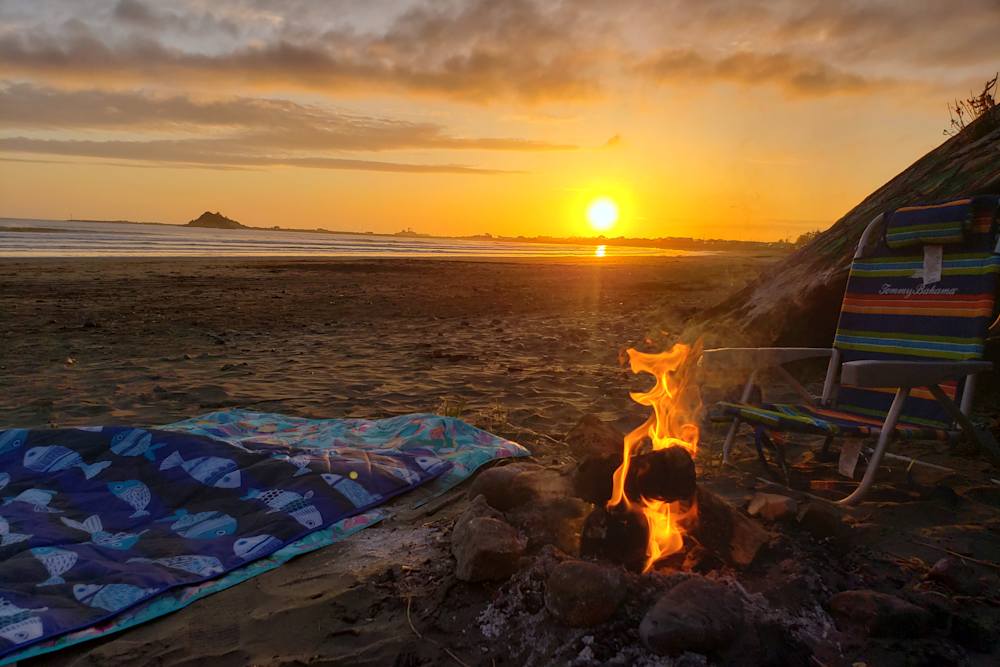
Coastal Forest Farm Camp
Coastal Forest Farm Camp is essentially a private campground all to yourself — one spacious site with farm animals, a fenced area great for dogs, and firewood ready to go on arrival. It's a quick trip to the beach and close to Crescent City, and hosts Vanessa and her husband go out of their way, including letting the kids meet the animals.
Book on Hipcamp
Lower Lake Farm Camp
Lower Lake Farm Camp is a genuinely pleasant farm stay just a mile from the beach, with responsive hosts Jose and Carolyn who'll drop off fresh garden vegetables and help you hook up your trailer. Worth knowing: three large dogs roam the property and can bark loudly at all hours, which was a real issue for at least one long-term guest.
Book on Hipcamp
Bayside Cabin
A genuinely restorative rustic cabin near Arcata where the outdoor kitchen, wood-fired evenings, and old-growth setting do most of the work — guests consistently describe feeling their stress lift just walking the path in. Bring your own linens and embrace the banana slugs; Ted and Emily are attentive hosts without being intrusive.
Book on Hipcamp
Ossia Village Farm
A working farm stay with genuine communal energy — think feeding Highland cows, wandering blackberry paths to redwoods, and sharing a fire pit with fellow guests rather than having a secluded site to yourself. The Hydrangea Dome is well-equipped with a fridge, heater, and hammock, but light sleepers should know the animals start early and the shared spaces mean real neighbors.
Book on Hipcamp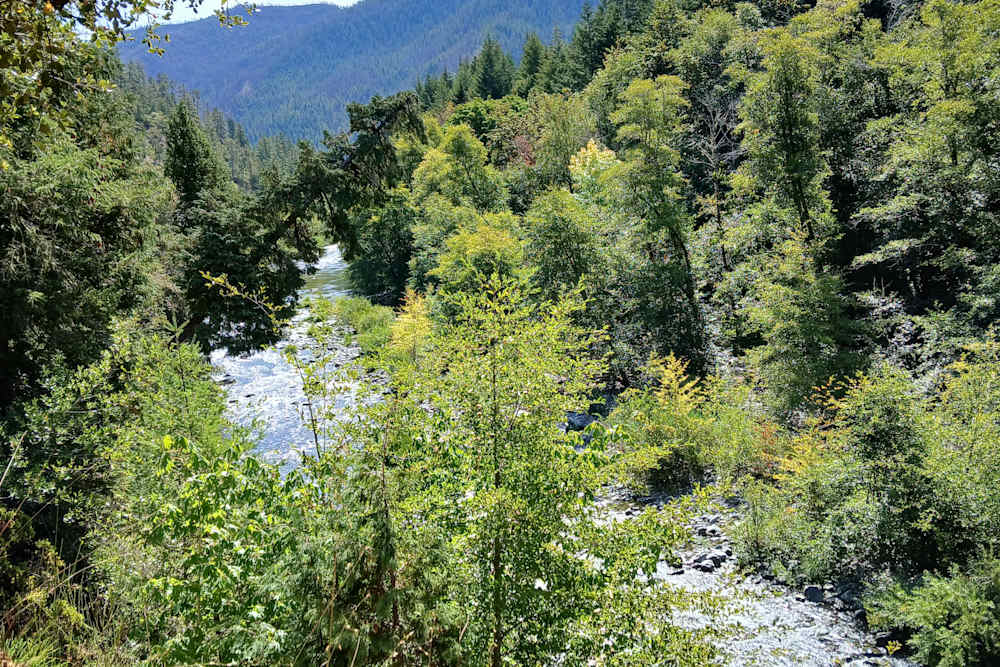
Azalea River
The private Smith River access is the real draw here — multiple guests mention swimming daily, spotting bald eagles, and dogs refusing to leave the water — but go in knowing the setup is genuinely rustic: solar power limits, a porta potty up the hill, and a freestanding loft ladder that's not for the nervous. Most guests find the tradeoffs more than worth it for the seclusion.
Book on Hipcamp
Bueno Mana Homestead
No guest reviews are available yet for Bueno Mana Homestead, so there's nothing firsthand to go on — worth watching for early feedback before booking.
Book on Hipcamp
Jedediah Smith Redwoods Campground
Jedediah Smith is the real deal for redwoods camping — sites sit right among the giants, the Smith River is steps away, and trailheads for Stout Grove and the Boy Scout Tree are basically in your backyard. No electrical hookups, but bear boxes and water are on-site, and at $35 a night it's hard to argue with waking up next to a tree you can spend a minute and a half walking around.
Visit Official Site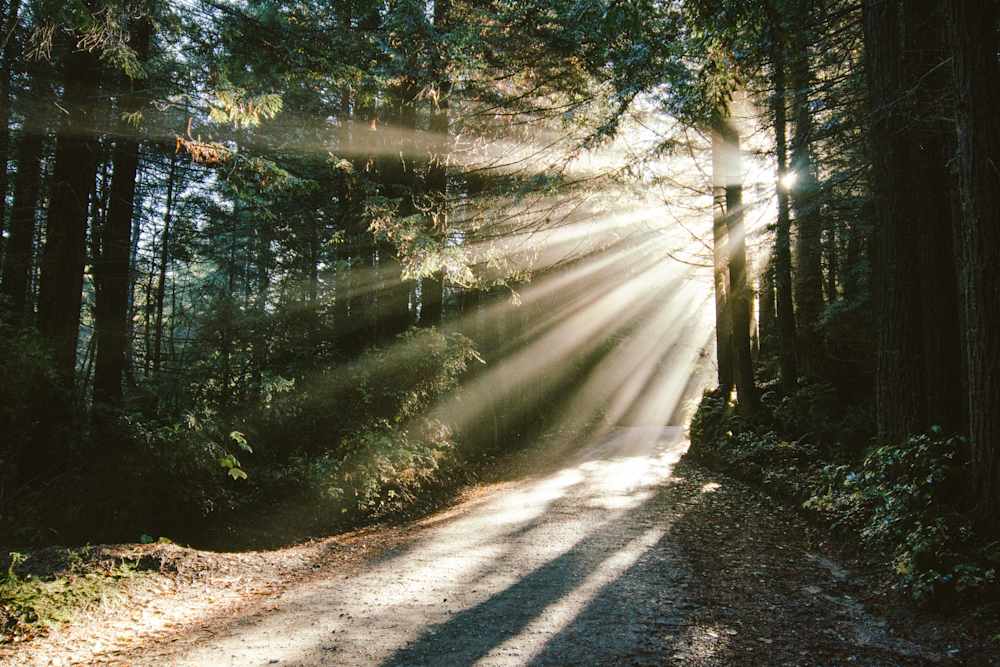
Gold Bluffs Beach Campground
Gold Bluffs Beach earns its reputation — you're pitching a tent practically on the Pacific, elk wander the road in, and Fern Canyon is just down the way, but know that trailers are banned on the unpaved Davison Road and the drive in is genuinely pothole-riddled. The trade-off is instant beach access, zero light pollution, and the kind of quiet that comes with owls and coyotes instead of neighbors.
Visit Official SitePlanning Your Redwood Trip
Best Time to Visit
May through September is peak season and the most reliable for dry weather—though "dry" is relative here. The coast redwoods exist because of the fog, and that fog rolls in thick most summer mornings before burning off by midday. Temperatures stay mild, rarely cracking 70°F near the coast even in July. The combination of morning fog and afternoon light filtering through the canopy is something else. This is also when the campgrounds fill fastest; reserve Jedediah Smith and Gold Bluffs Beach as early as Recreation.gov allows (typically six months out).
October and November are underrated. Crowds drop significantly after Labor Day, the fall light turns amber and warm, and the elk rut begins—the bulls are vocal and the bulls are big. The Smith River begins to clear and rise after the first rains. Expect some wet days, but the old-growth groves are arguably more atmospheric in the rain.
December through March brings the heaviest rainfall and the greenest, most saturated colors you'll ever see in a forest. Fern Canyon is extraordinary in winter—the ferns are thick and the creek runs high through the slot. Many campgrounds close or reduce capacity. The park sees almost no visitors. If you're prepared for rain and short days, a winter trip to Redwood is one of the most memorable things you can do in California.
April is the sweet spot for shoulder-season visitors: the wildflowers are up, the forest is intensely green, weekday campsite availability is good, and the weather is improving without the summer crowds. The trillium blooms along the Hiouchi Trail in late April are worth the trip alone.
What to Know Before You Go
Four parks, one system. Redwood National and State Parks are managed jointly by the NPS and California State Parks. Your America the Beautiful pass covers the national park portions and reduces fees at the state park campgrounds. The two systems use different reservation platforms—federal sites on Recreation.gov, state park sites on ReserveCalifornia. Know which you're booking before you search.
Gold Bluffs Beach requires a timed-entry permit on summer weekends for the Fern Canyon day-use area. The road to the beach is unpaved, narrow, and not recommended for RVs or low-clearance vehicles. The campground itself is one of the most exposed coastal sites in California—bring serious stakes for your tent, as the wind off the Pacific is real.
Jedediah Smith is the crown jewel campground. It sits in old-growth, adjacent to the Smith River, with sites shaded by 200-foot redwoods. The Howland Hill Road drive through the Stout Grove is an unpaved scenic route that competes with any drive in the state park system. Do it slowly, in a regular-height vehicle, windows down.
Roosevelt elk are everywhere and they are not small. Bulls can top 1,000 pounds. Keep at least 50 yards. They are not afraid of you. The meadows at Prairie Creek Redwoods, Lady Bird Johnson Grove, and the Orick area see herds regularly—most reliably at dawn and dusk.
Cell service is essentially nonexistent throughout most of the park, including in Crescent City. Download offline maps before you arrive. The NPS app works offline for trails. Let someone know your itinerary.
The fog is the point. Redwoods need the moisture. Bring layers—coastal mornings can sit in the low 50s even in summer. A fleece and a rain shell belong in every day pack, regardless of the forecast.
Nearby Activities
Hiking: The James Irvine Trail at Prairie Creek is the park's finest full-day hike—12 miles through old growth, dropping to Gold Bluffs Beach and looping back through Fern Canyon. The Boy Scout Tree Trail near Jedediah Smith reaches an enormous double-trunked redwood through near-total solitude. Trillium Falls is an easy 2.5-mile loop near Elk Meadow that's excellent for families and usually has elk sightings. For a short, high-impact walk, the Lady Bird Johnson Grove loop delivers cathedral old growth in under an hour.
Swimming: The Smith River is the best swimming river in Northern California. No contest. Swimming holes near the Hiouchi area and along South Fork Road are cold, emerald-clear, and surrounded by old growth. The river runs warmest in late July and August. Further south, the Eel River in Humboldt Redwoods State Park is another excellent summer swimming destination on the way north.
Wildlife: Roosevelt elk at Prairie Creek Elk Prairie and Elk Meadow near Orick. Harbor seals and sea lions at the mouth of the Klamath River. Gray whales offshore during their winter migration (December–January southbound, March–April northbound). Black bears are present throughout—store food properly.
Kayaking and paddling: The lower Smith River is excellent for sea kayaking and stand-up paddleboarding in late summer when flows are low. The Klamath River estuary is worth a morning paddle for the bird life. Del Norte County has rentals and guided trips out of Crescent City.
The Trees of Mystery in Klamath is worth a stop—a kitschy roadside attraction with a gondola that gives you an above-canopy perspective and a surprisingly good Native American museum. Don't let the chainsaw sculptures fool you; the gondola view is legit.
Frequently Asked Questions
What is the best campground in Redwood National and State Parks?
Jedediah Smith Redwoods is the consensus answer, and it earns it. The sites sit directly in old-growth forest—some within a short walk of 300-foot trees—and the Smith River runs alongside the campground. It's a Category 1 reservation target: book the moment the six-month window opens on Recreation.gov. If Jedediah Smith is full, Gold Bluffs Beach is the runner-up, offering the only beach camping in the park system with immediate access to Fern Canyon. Prairie Creek Redwoods campground is a solid fallback with excellent old-growth access and frequent elk sightings.
How do I get to Fern Canyon?
Fern Canyon is accessed via Davison Road, a narrow unpaved road that begins near the Elk Meadow area of Prairie Creek Redwoods State Park. The drive is about 3 miles and requires a vehicle with reasonable clearance—passenger cars make it fine in dry conditions, but it's not suitable for RVs or trailers. On summer weekends, a timed-entry permit is required for the day-use parking area; these are available on Recreation.gov and sell out quickly. Alternatively, camp at Gold Bluffs Beach and walk in—you'll be there before the day-use crowd arrives.
Where can I see Roosevelt elk in Redwood?
The most reliable spots are Elk Prairie at Prairie Creek Redwoods State Park and the meadows near Elk Meadow Day Use Area just south of Orick on Highway 101. Herds of 50 or more animals are common at dawn and dusk. During the fall rut (September–October), bulls are bugling and actively moving. Stay at least 50 yards from all elk—bulls during rut are unpredictable and have charged vehicles. The Lady Bird Johnson Grove area also sees regular elk activity.
Is the Smith River safe for swimming?
Yes, and it's exceptional. The Smith River is the longest undammed river in California and runs exceptionally clear—visibility of 20+ feet in low-water conditions. The best swimming holes are near Jedediah Smith campground, along South Fork Road, and at the Hiouchi area. Water temperatures peak in late July and August, reaching the low-to-mid 60s. Earlier in the season the river runs cold and fast from snowmelt—check flows before swimming in May and June. The river is best for confident swimmers; there are no lifeguards.
Do I need a reservation to visit Redwood National Park?
There is no timed-entry reservation for the park overall—you can drive through anytime. However, a timed-entry permit is required for Fern Canyon on summer weekends (typically Memorial Day through Labor Day), and campground reservations are essential for Jedediah Smith, Gold Bluffs Beach, and Prairie Creek. These book up within hours of the six-month window opening on Recreation.gov and ReserveCalifornia. Some walk-up sites are held each day at Jedediah Smith—arrive at the campground early if you're trying for one.
What should I know about driving the Avenue of the Giants?
The Avenue of the Giants is a 32-mile alternative to Highway 101 that runs through Humboldt Redwoods State Park—about two hours south of Redwood National Park but well worth including in any North Coast trip. It's an easy, flat drive through near-continuous old-growth redwoods with multiple pullouts, short walks, and the Founders Grove trailhead midway. The Rockefeller Forest here is the largest remaining old-growth coast redwood forest in the world. Plan at least two hours for the drive with stops. It's also where the Dyerville Giant fell in 1991—its root ball still stands taller than a two-story house.
Wildlife Sounds
Observations from iNaturalist