Joshua Tree
By Julian Bialowas & Daniel Tomko·Updated April 2026
Joshua Tree is two deserts fused into one weird, beautiful park, and the seam where they meet is something you have to experience to understand. The Mojave Desert dominates the western half—higher elevation, cooler temperatures, and those iconic twisted Joshua trees that look like something Dr. Seuss dreamed up. Drop into the eastern Colorado Desert section and the Joshua trees disappear, replaced by ocotillo and cholla cactus and a landscape that feels like another planet. The boulder formations that spill across both halves are what most people come for: Jumbo Rocks, Split Rock, Skull Rock—geology so dramatic it looks staged.
There are nine developed campgrounds in the park, and here's the thing nobody tells first-timers: most of them have zero water. Bring everything you need. Black Rock and Cottonwood are the exceptions—they have potable water and flush toilets. The rest (Jumbo Rocks, Hidden Valley, Belle, White Tank, Ryan, Sheep Pass, and Pinto Basin Road's dispersed sites) are dry. That means packing in a gallon and a half of water per person per day minimum, more in warmer months. First-timers regularly underestimate this and it can turn a great trip into a medical emergency.
The payoff for hauling all that water is some of the best stargazing in Southern California. Joshua Tree is an International Dark Sky Park, and once the crowds thin out around 9 or 10pm, the sky overhead will stop you cold. The park sits at 4,000+ feet in the Mojave section, which means even summer nights cool down enough to sleep. But the sweet spot is October through April—days in the 60s and 70s, nights crisp and clear, and the possibility of catching a desert wildflower bloom if March rains cooperate.
Top Campgrounds Near Joshua Tree

Views! 15 min to Joshua Park
A wide-open high desert plot just 15 minutes from Joshua Tree that consistently delivers solitude, big views, and dark skies — multiple reviewers came back for a second trip and didn't see another soul. It handles larger rigs and caravans of five trucks, though the rough road might give low-clearance campers pause, and yes, coyotes do wander through.
Book on Hipcamp
Milky Way Stay
A quiet, easy-to-find desert spot near Joshua Tree where the main draw is the night sky — reviewers specifically called out Milky Way views, a blood moon, and coyotes howling in the dark. The clean outhouse with toilet paper on-site is a genuine perk that multiple guests mentioned.
Book on Hipcamp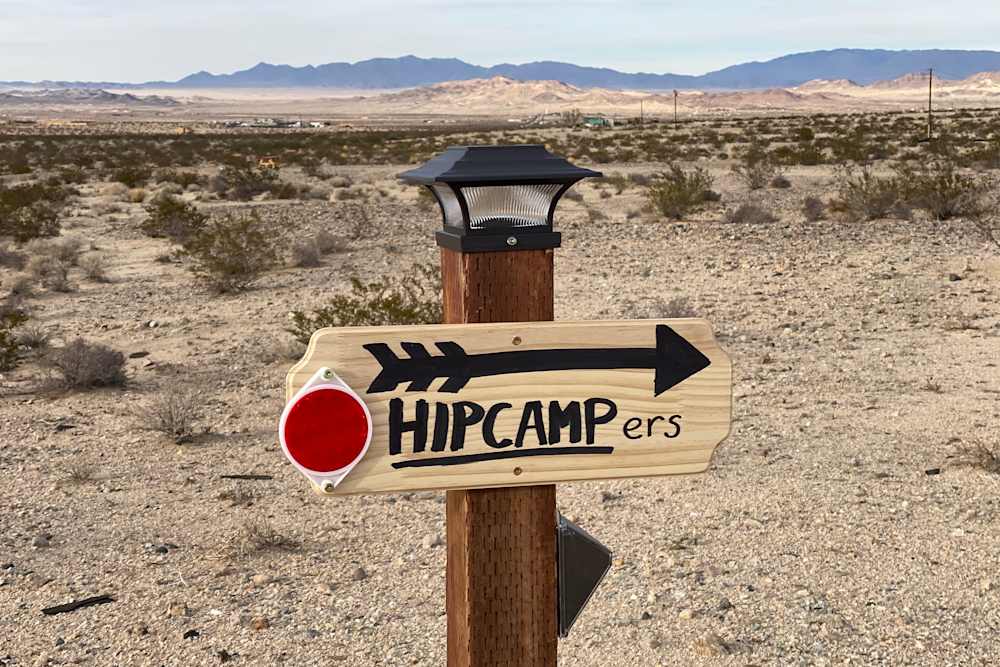
Stars and Valley Boondock Campsite
Rebecca runs a tight ship — her detailed directions, spotless outhouse, and quick communication get called out repeatedly, and a 30-foot RV had no trouble getting in and out. It's an open, exposed site with unreal desert views close to 29 Palms, so come prepared if it's windy.
Book on Hipcamp
Tipi Canyon, Joshua Tree Nat’l Park
A reliably peaceful, slightly elevated site with well-maintained dirt roads, easy Black Rock entrance access, and a responsive host — one family has stayed here across multiple seasons and calls it one of their favorite places on the planet. Note that the ground isn't quite as level as the photos suggest, though workable spots exist for trailers up to at least 26 feet.
Book on Hipcamp
Stargazer Cabin
Stargazer Cabin earns its name — guests consistently rave about the dark skies, and the property backs that up with a well-stocked outdoor setup including a fire pit with bean bag chairs, hanging hammocks, and a hot tub. The interior is equally solid (fully stocked kitchen, in-unit washer/dryer, indoor jacuzzi), and host Mike's responsiveness comes up in almost every review, which goes a long way when you're out in the desert.
Book on Hipcamp
5+ Acres near Joshua Tree NP
Mineral Spring Date Farm is the kind of place that could only exist at the edge of the Mojave — a handcrafted oasis where individual sites are tucked among date palms and each comes with its own mineral spring hot tub. It's deeply distinctive to this corner of the desert and has the quiet cult-favorite energy that makes for the most compelling editorial story. No other facet winner combines Joshua Tree's sense of otherworldly isolation with this level of thoughtful, place-specific character.
This lotus tent setup on 5+ acres feels more curated desert retreat than campsite — think cowboy pool, pizza oven, a telescope, and art installations scattered across the BLM land it backs up to. Hosts Martha and Maria get repeated shoutouts for being genuinely helpful, and the consensus is that the thoughtful details set it apart from anything else near Joshua Tree.
Book on Hipcamp
Serene! 15 min to Joshua Natl Park
David's desert campsite delivers on the basics really well — solid fire ring, a sturdy table, excellent dark skies, and clear directions that multiple guests call out as genuinely helpful for finding a spot that can be tricky to locate. Worth knowing: it sits adjacent to a dirt bike path, so expect some ATV noise during daylight hours before things quiet down at night.
Book on Hipcamp
Coyote Hideaway | WOW view✨
Coyote Hideaway is genuinely remote-feeling despite being just minutes from Joshua Tree's west entrance, and the panoramic desert views from the hot tub and deck are the real selling point here — especially on a new moon. One practical note from reviewers: the sink, stove, and hot tub are spread apart from the main room, so keep meals simple and pack accordingly.
Book on Hipcamp
Mineral Spring Date Farm
A genuinely special off-the-beaten-path oasis near Joshua Tree where host Ron has created individual, thoughtfully placed sites among date palms — each with its own mineral spring hot tub that's perfect for soaking after a long hike. It's the kind of place regulars are quietly hoping doesn't get too popular.
Book on Hipcamp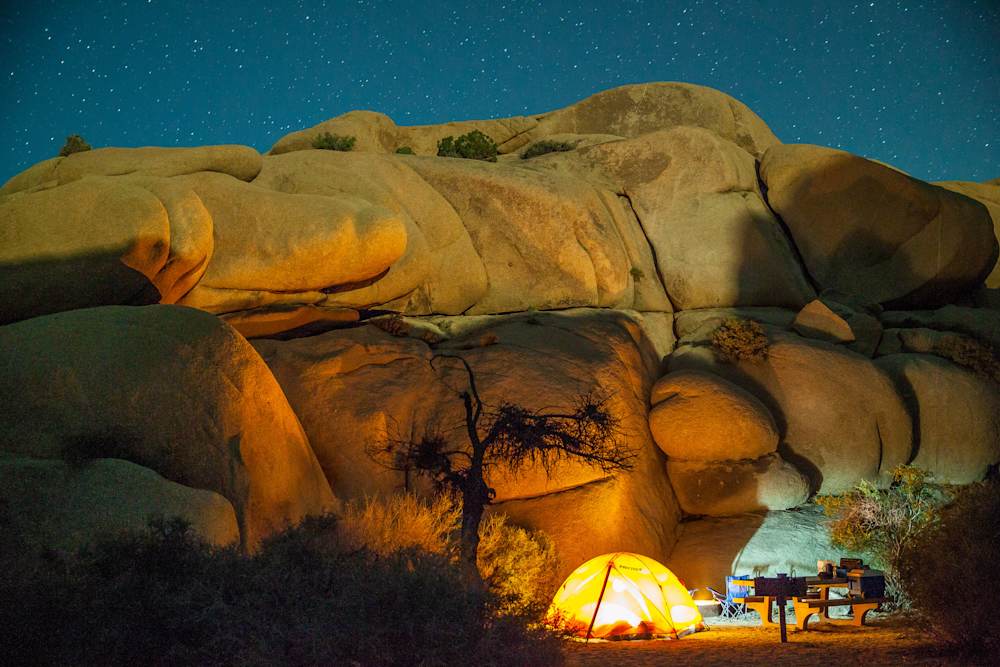
Jumbo Rocks Campground
Jumbo Rocks is one of the marquee Joshua Tree camping experiences — stunning boulders, exceptional stargazing, and solid fire pit setups — but go midweek if you can, since weekend crowds spill in from nearby trailheads and the front sites lose their peace fast. Larger RVs will struggle here.
Visit Official Site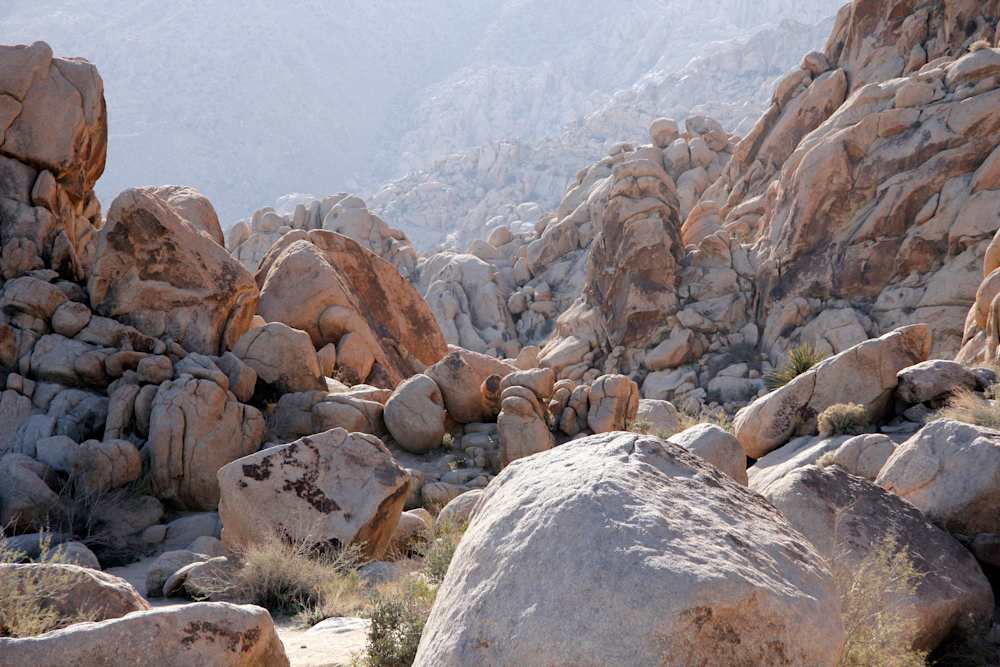
Indian Cove Campground
Indian Cove sits just outside the national park boundary but delivers the full Joshua Tree experience — massive boulders surrounding your site, excellent stargazing, and a nearby trail worth hiking — with the bonus of a bit more breathing room between sites than the busier in-park options.
Visit Official Site
Hidden Valley Campground
Hidden Valley is a climber favorite and a legitimately beautiful spot — the sunset walk on the Hidden Valley Nature Trail alone is worth the trip — but be ready for noise and light from site-seekers circling late into the evening, especially on weekends. Ear plugs aren't a bad idea.
Visit Official Site
Ryan Campground
Ryan Campground puts you right among Joshua Tree's iconic granite boulders with genuinely spectacular night skies, but the lack of a camp host means nuisances like trespassers and content-creators flooding your site with lights can go unchecked. Worth it for day hiking and stargazing, though you may want to temper expectations around privacy and peace.
Visit Official Site
Black Rock Campground
Black Rock sits just outside the park boundary—meaning a half-hour drive to the main attractions—but rewards campers with flush toilets, water fill and dump access, a botanical garden walk, and quieter, well-maintained sites on the fringes. A solid, no-frills base camp, especially for winter visits when the desert is at its most comfortable.
Visit Official SitePlanning Your Joshua Tree Trip
Best Time to Visit
October–November: The absolute best. Temperatures drop into sanity—days in the upper 60s to low 70s, nights in the 40s. Crowds are lighter than spring. The light goes golden in late afternoon and the boulders glow. This is when regulars come.
December–February: Cold enough for a real sleeping bag (lows in the 30s, occasional freezes) but also the quietest and most raw version of the park. You can walk into Hidden Valley or Jumbo Rocks on a Tuesday and have it to yourself. Snow occasionally dusts the higher elevations—surreal against the desert floor.
March–April: Peak season and worth every reservation battle. This is superbloom territory if winter rains were good—years like 2019 and 2023 delivered carpets of yellow and purple across the park floor. Book 6 months out and still have a backup plan.
May: The cutoff. Temperatures start climbing into the 90s. Manageable in early May but deteriorating fast.
June–September: Avoid unless you enjoy suffering. Average highs hit 100°F and the park empties out accordingly. The only exception is a full moon night in summer—arrive after dark, leave before noon.
What to Know Before You Go
Water: This cannot be overstated. Only Black Rock Campground (northwest entrance near Yucca Valley) and Cottonwood Campground (south entrance near I-10) have potable water. Every other campground—including Jumbo Rocks, Hidden Valley, Belle, and White Tank—has none. The park recommends 1.5 gallons per person per day; in temperatures above 80°F, bring more. Stock up in Twentynine Palms or Joshua Tree town before entering.
Cell service: Essentially none inside the park. Download offline maps (Gaia GPS or Maps.me) before you arrive. The town of Joshua Tree and Twentynine Palms have decent service; you'll lose it entirely once you're a few miles inside the park boundaries.
Gas: Fill up before entering. The nearest stations are in Joshua Tree (west entrance) and Twentynine Palms (north entrance). There is no gas inside the park. Running out of fuel in a remote canyon with no cell service is a real scenario that happens every season.
Fire restrictions: Campfires are only permitted in the metal fire rings at developed campgrounds—and often banned entirely during high fire danger periods, typically May through October. Check current conditions at nps.gov/jotr before arriving. Ground fires are never permitted. Bring a camp stove for cooking regardless of season.
Fees: $35 per vehicle for a 7-day pass. America the Beautiful pass accepted. No hookups anywhere in the park—this is dry camping throughout.
Private land alternatives: The BLM land outside Joshua Tree's south boundary allows free dispersed camping, but if you want something with more amenities—a fire ring, maybe a bathroom, guaranteed flat ground—Hipcamp lists private properties near the park entrances in Yucca Valley and Twentynine Palms. Some are set up specifically for the Joshua Tree crowd: dark sky viewing, desert scenery, and proximity to the park without the first-come-first-served gamble.
Nearby Activities
Skull Rock Nature Trail (1.7 miles): The most accessible boulder scramble in the park, starting right at Jumbo Rocks campground. The trail loops past Skull Rock—a water-eroded formation that actually looks like a skull—and through a series of boulder piles that beg to be climbed. Good for kids, great for sunset.
Ryan Mountain (3 miles round-trip): The best 360-degree view in the park. A sustained climb to 5,457 feet earns a panorama that takes in the Pinto Basin, the San Bernardino Mountains, the Salton Sea on clear days, and the full sweep of boulder fields below. Worth every step.
Hidden Valley Trail (1 mile loop): A short scramble through a enclosed valley of boulders that cattle rustlers supposedly used in the 1800s. It's ringed by some of the best beginner climbing routes in the park and feels like a natural amphitheater. Crowded on weekends but magical at dawn before the day hikers arrive.
Cholla Cactus Garden (0.25 miles): A flat, easy loop through a dense stand of teddy bear cholla that glows orange in late afternoon light. Looks soft and friendly. Is not. Stay on the trail—the spines detach on contact and are extremely painful to remove. Worth the stop on any drive through the park.
Keys View: A five-minute drive and a two-minute walk to one of the great desert views in California. At 5,185 feet, the Coachella Valley spreads below you—Palm Springs, the Salton Sea, and on clear winter days, the mountains of Mexico. Go at sunrise or sunset.
Rock climbing: Joshua Tree is one of the premier climbing destinations in North America, with over 8,000 established routes across every difficulty level. Hidden Valley, Intersection Rock, and Jumbo Rocks are the main areas. Joshua Tree Rock Climbing School runs guided trips out of the park; rentals available in the town of Joshua Tree.
Frequently Asked Questions
Which Joshua Tree campground should I choose?
It depends on what you're after. Jumbo Rocks (124 sites, first-come first-served) puts you right in the middle of the signature boulder formations and has great stargazing—it's the most 'Joshua Tree' experience of any campground. Hidden Valley (44 sites, first-come first-served) is smaller and quieter, surrounded by climbers and photography people. Belle and White Tank are tiny first-come spots on the eastern edge, great for solitude. If you need water and a flush toilet, you're choosing between Black Rock (northwest, near Yucca Valley) or Cottonwood (south entrance). Jumbo Rocks fills by Friday afternoon most of the year—arrive by noon Thursday if you want a site.
Can you do Joshua Tree in one night?
Yes, and lots of people do. Drive in on a Friday evening, camp at Jumbo Rocks or Hidden Valley, spend Saturday hiking and scrambling, drive out Sunday morning. You'll miss the depth of the place but you'll get the boulders, the dark sky, and enough desert to understand why people come back obsessively. One night is better than none. Two nights is the real minimum if you want to do Ryan Mountain, Hidden Valley, Cholla Cactus Garden, and a sunrise at Keys View.
Is Joshua Tree safe in summer?
It's dangerous in peak summer (June through August) and the park treats it that way. Average highs reach 100–108°F, and every year hikers require emergency evacuation from heat-related illness. The park recommends visiting only before 10am and after 4pm from June through September. If you go in summer, camp at night, sleep late, hike before dawn, retreat to your car or a shaded site during midday. Bring twice the water you think you need. Many experienced desert campers simply don't visit from June through August.
Do you need a reservation for Joshua Tree campgrounds?
Most campgrounds are first-come, first-served—including the most popular ones like Jumbo Rocks, Hidden Valley, Belle, and White Tank. Black Rock and Cottonwood accept reservations through recreation.gov and are highly recommended for spring (March–April) weekends. Group sites at Sheep Pass are reservation-only. The first-come campgrounds are fiercely competitive on spring weekends—people arrive by Thursday afternoon to claim sites for the weekend. Weekdays from October through February you'll usually find open sites without much trouble.
What should I bring to Joshua Tree that I might forget?
Beyond the obvious camping gear: more water than you think (and a way to carry it on hikes—a hydration pack, not just bottles), a headlamp with fresh batteries for boulder scrambling at night, sunscreen and a sun hat even in winter (the desert sun is relentless at 4,000 feet), warm layers for nighttime (temperatures can swing 40 degrees from afternoon to midnight), and cash for the self-pay fee stations if your America the Beautiful pass isn't handy. Download offline maps before entering the park—your cell signal disappears fast.
Is there a town near Joshua Tree with food and supplies?
Yes, and it's worth factoring into your trip. The town of Joshua Tree (west entrance) has a handful of good spots: Crossroads Cafe is the local diner, Natural Sisters Cafe is the coffee stop, and there's a small market for last-minute supplies. Twentynine Palms (north entrance) is a bit bigger with more gas stations and a full grocery store. Yucca Valley is the largest nearby town with a big supermarket, REI-adjacent outdoor shops, and every fast food option you'd want to avoid. Stock up before entering—there is nothing inside the park.
Wildlife Sounds
Observations from iNaturalist