Gold Country
By Julian Bialowas & Daniel Tomko·Updated April 2026
Gold Country is the part of California that everyone knows about and almost nobody camps in, which is an oversight that keeps getting corrected by people who stumble into it once and then come back every year. The Sierra Nevada foothills run from the Yuba River in the north down through Nevada City, Auburn, Coloma, Placerville, Amador City, and Sutter Creek, then fan out into the wine country of El Dorado and Amador counties. The elevation sits between 1,500 and 3,000 feet for most of the campable terrain: high enough that summer nights are actually cold, low enough that the roads stay open year-round and spring arrives six weeks before it does at Lake Tahoe.
The South Fork American River is the centerpiece. It runs cold and green through a canyon that the Gold Rush settlers blasted, dredged, and hydraulically mined within an inch of its life, and it has recovered into one of the most popular whitewater rivers in California, with Class III and IV rapids that draw commercial raft trips from April through September. The campsites at Chili Bar put-in and at Camp Lotus near Coloma sit directly on the river. You can hear the rapids from your tent. The water is cold enough to keep your beer cold without ice if you set it in an eddy.
Marshall Gold Discovery State Historic Park in Coloma is where James Marshall found the first gold flake in the millrace of Sutter's Mill on January 24, 1848: a discovery that triggered the largest voluntary mass migration in American history. The park has reconstructed the mill, preserved the original site, and set it all in a canyon of valley oaks and cottonwoods along the river that genuinely looks like 1848. Camp at Camp Lotus a mile upstream and you're sleeping in the canyon where California started. There are not many places where history and camping land in the same spot this directly.
For private land camping, Gold Country is prime Hipcamp territory. The ranches and vineyards of El Dorado and Amador counties have been opening up to campers over the past decade, and the results are some of the most characterful sites in the state. A working cattle ranch near Plymouth. A vineyard in the Shenandoah Valley with fire pits between the vines. A farmstead in the foothills above Placerville where you can see the Sacramento Valley from your sleeping bag. These sites don't appear on Recreation.gov. Browse Hipcamp and you'll find options that the state park system simply can't replicate.
Top Campgrounds Near Gold Country

Walden Ranch
Walden Ranch is a working farm experience where host Alan genuinely shares his land — pond, canoes, paddleboat, firewood, and a parade of animals including horses, peacocks, and Adrian the potbelly pig. Just know that roosters crow at odd hours, the neighbor's hog can startle you, and the showers are cold and open-air, so pack earplugs and temper your expectations on facilities.
Book on Hipcamp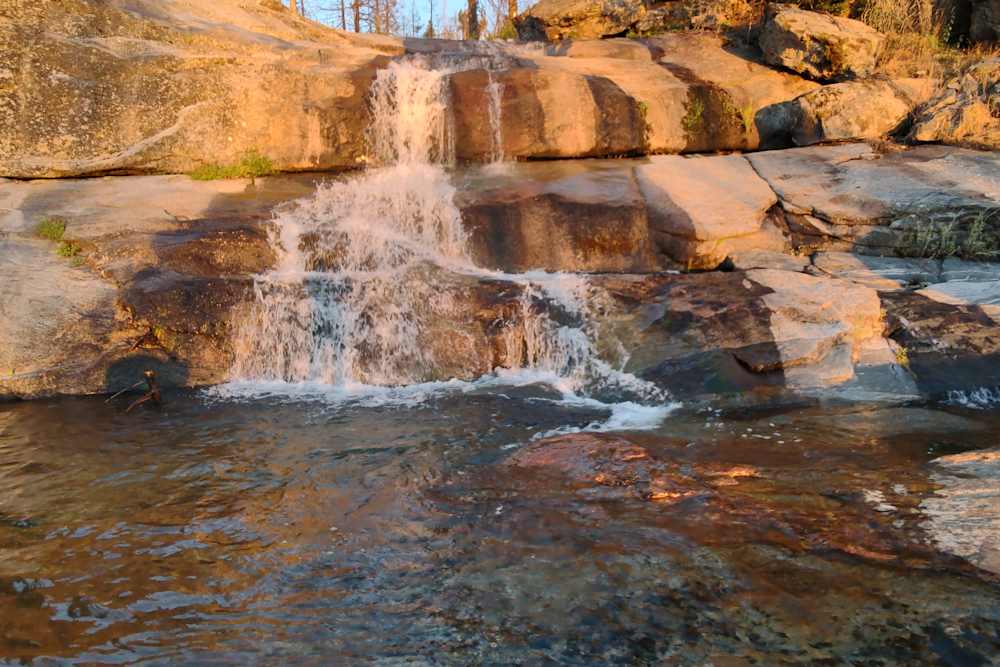
Musick Creek Falls by Shaver Lake
Musick Creek Falls delivers a genuinely stunning campsite right alongside a waterfall and swimmable natural pools, with hosts Shandie and Jesse going out of their way with firewood delivery, local tips, and late-night check-ins. Fair warnings: the falls can be loud enough to make conversation difficult, the rocky access road to Musick Cove needs a 4x4, and upper sites have sightlines down into lower ones, so privacy varies.
Book on Hipcamp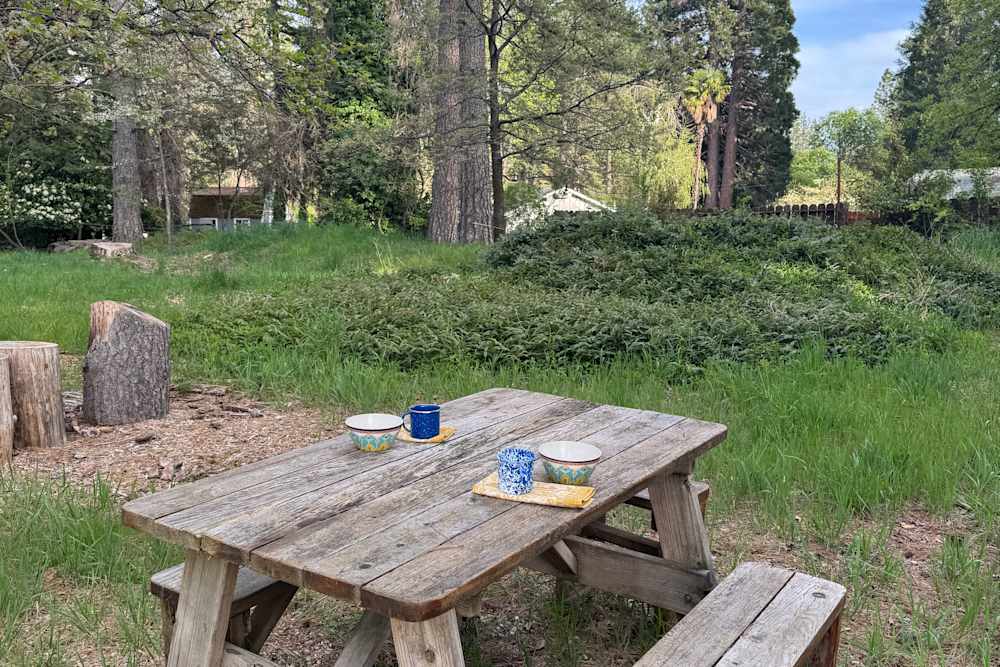
Shady In-Town Creekside Campsite
A low-key, tree-shaded site behind the owner's home in Grass Valley that punches above its weight for van-lifers and RV travelers thanks to electric hookups, a garden hose, and a pretty man-made creek — all a short bike ride from Nevada City. The one real gap is no on-site bathroom, which a few guests noted sent them scrambling.
Book on Hipcamp
Squirrel Rock RV Campground
Julie has thought of everything at Squirrel Rock — flat graveled pad, water and electric hookups, Edison string lights tucked into the rocks, a covered picnic area, lawn games, and a clean BBQ grill, all within walking distance of Columbia State Park. Guests consistently compare it to an unexpected upgrade, and the massive granite boulders left by Gold Rush miners are apparently a hit with kids.
Book on Hipcamp
Lazy Bear Cabin
Jeff's off-grid cabin near Tahoe National Forest is a solid hiking basecamp — think cozy, functional, and genuinely quiet — but go in with eyes open: no linens are provided, the bathroom lacks a door, and you'll want AWD in winter for that last dirt stretch. Multiple return visitors speak to its charm, even if the amenities are bare-bones.
Book on Hipcamp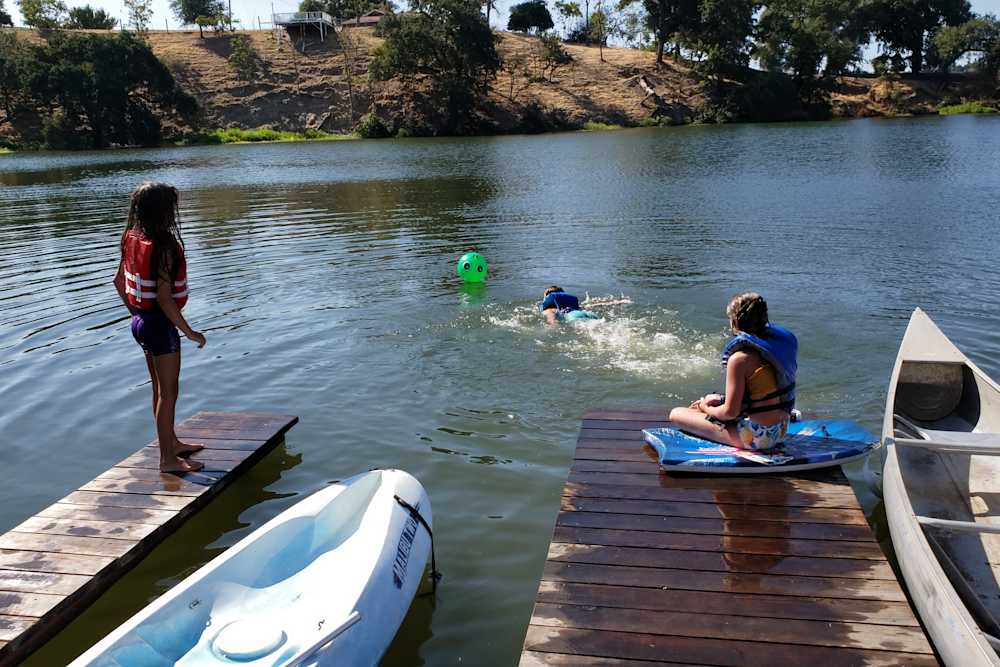
Leards L-3 Ranch
Travis's L-3 Ranch punches above its weight for a family campout — the private lake with rowboats, a genuinely clean flush toilet, firewood, and a covered cooking area are real differentiators, and the host's barn tours are a bonus kids won't stop talking about. The one honest caveat from a repeat guest: aquatic weeds have been slowly taking over the lake.
Book on Hipcamp
Kimball Farm
Kimball Farm is a low-key gem near Sacramento — a small working operation where the roosters, ducks, and cows are part of the experience, not a nuisance — and George's hospitality, the sauna, and the optional wine tasting make it easy to understand why guests keep coming back. Electric and water hookups make it practical for trailer campers too.
Book on Hipcamp
Cozy Luxury Yurt @ Lazy Dog Ranch
David's yurt at Lazy Dog Ranch near Nevada City is the rare glamping spot that genuinely delivers on the promise — custom-built furniture, a full kitchen, swamp cooler, strong WiFi, and an attached bathroom — all a short drive from the Yuba River swimming holes and downtown breweries. Minor gripes about dense pillows and a sometimes-overlooked kitchen cleaning are the only things keeping it from perfect.
Book on Hipcamp
Peace in the Pines
Renee is the kind of host who leaves fresh garden produce in a basket, bakes treats for your dog, and tips you off to quieter swimming holes—her cozy, well-stocked trailer in the pines near Nevada City genuinely delivers on the 'peaceful retreat' promise. Repeat visitors keep coming back, and it's easy to see why.
Book on Hipcamp
Upper Pines Campground
Upper Pines is the classic Yosemite Valley basecamp—bear boxes, bathroom access, and you're essentially doorstep to Happy Isles and the valley's best trails, though expect it to be crowded and bring layers if you're visiting in fall. Reviews are short here because the location does the talking.
Visit Official Site
Wawona Campground
Wawona is the quieter, southern alternative to the packed valley campgrounds—you trade some amenities and iconic hikes for river sounds at night, easy Mariposa Grove access, and noticeably fewer crowds. Sites near the river are the ones to go for, and the Chilnualna Falls trail is worth the trip on its own.
Visit Official Site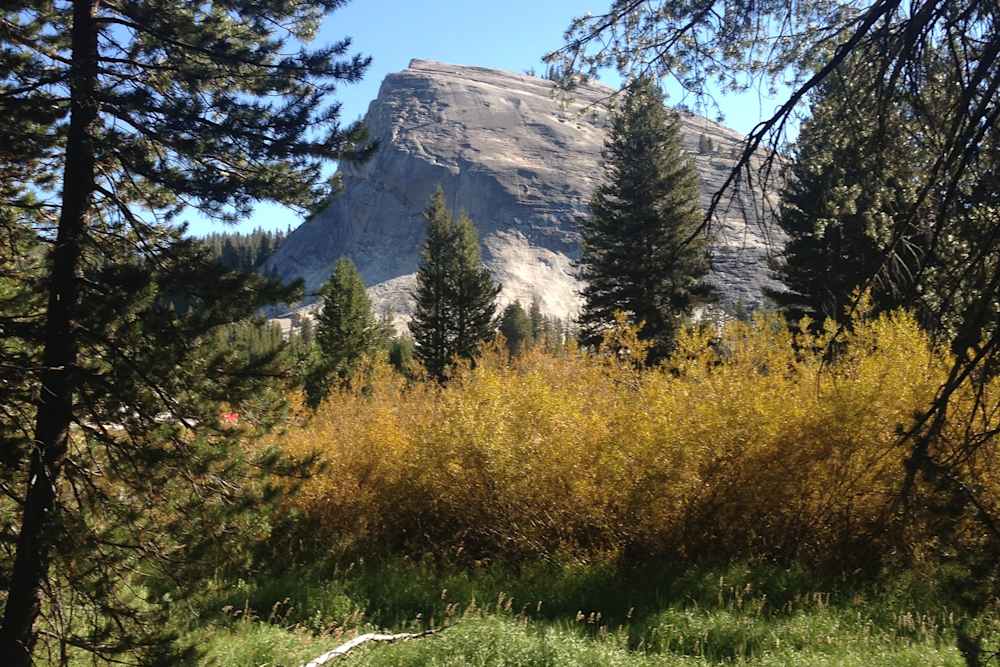
Tuolumne Meadows Walk-In Campground
Tuolumne Meadows Walk-In is a legit escape from the valley circus—no RVs, a backpacker-friendly vibe, and first-come-first-served sites that reward early risers, with the meadows, river, and a killer Half Dome viewpoint practically at your feet. Bears here are reportedly quiet, clever, and partial to spaghetti, so store your food accordingly.
Visit Official Site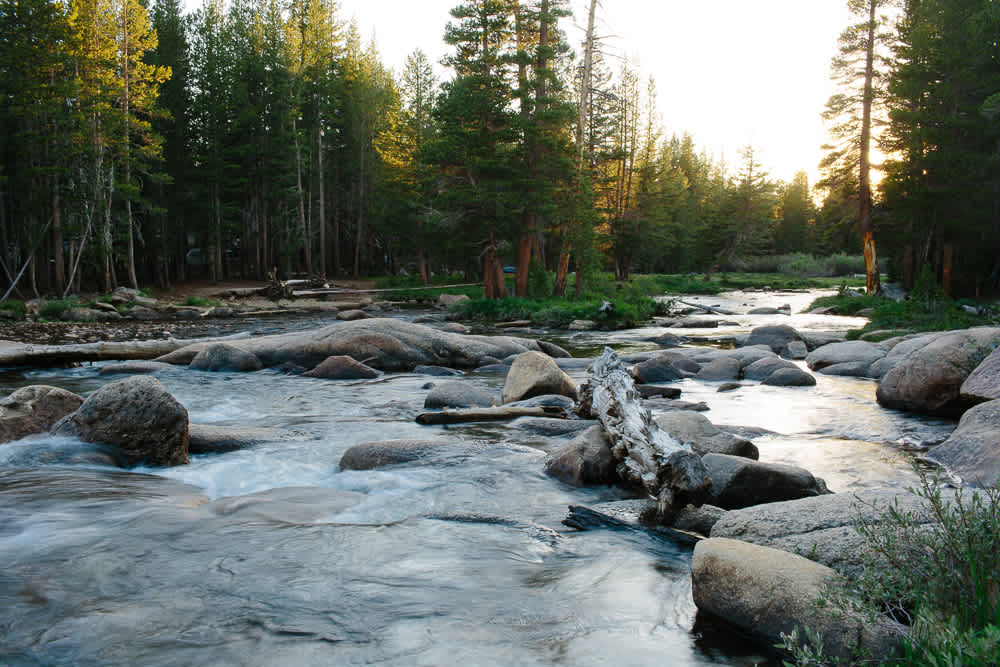
Tuolumne Meadows Campground
Tuolumne Meadows sits at high elevation with jaw-dropping access to trails like Cathedral Lakes and Elizabeth Lake, and a recent renovation brought new tables, fire rings, and bear bins to every site. Just know the washrooms still lack soap and lights, some sites are notoriously sloped, and you'll want leveling blocks if you're in a rig—but the 50% first-come, first-served availability is a genuine bonus in a reservation-heavy park.
Visit Official Site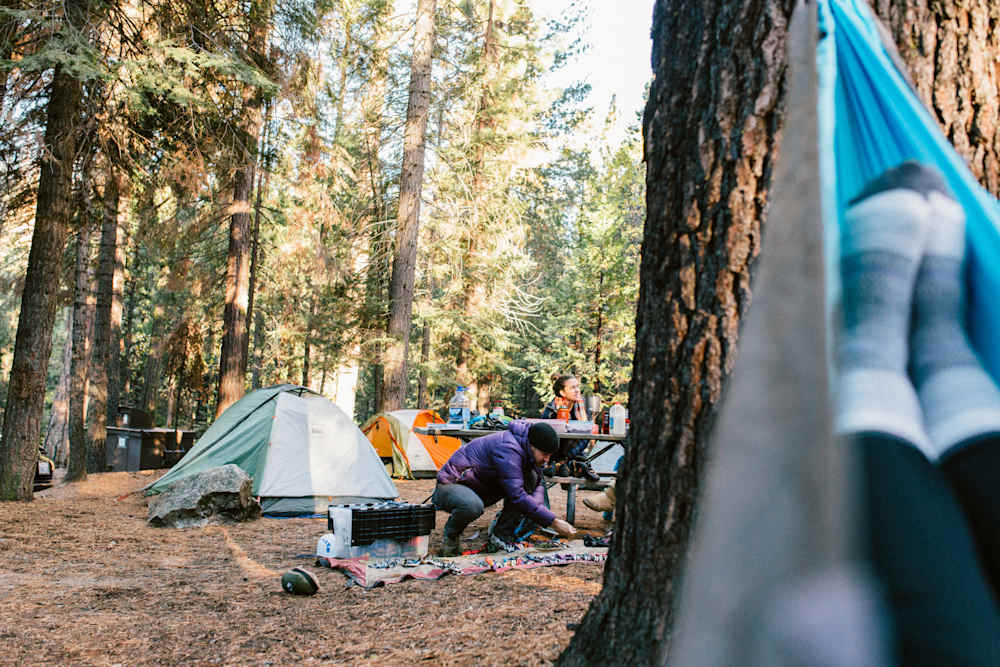
Hodgdon Meadow Campground
Hodgdon Meadow is a solid base camp right at Yosemite's entrance—and the big perk is that staying here means you skip the park entry reservation requirement entirely, saving you a real headache. Sites are close together and the terrain runs hilly, so tent campers should scout for flat ground, but staff get consistent praise and leaving early for the Valley works well from here.
Visit Official SitePlanning Your Gold Country Trip
Best Time to Visit
April and May are the peak of peak. The oak woodlands are vivid green, the American River runs at high volume from snowmelt but is still raftable, wildflowers cover the roadsides from Auburn to Sutter Creek, and temperatures sit in the low 70s during the day with genuine sleeping-bag nights in the 40s. This is the best camping weather in the foothills. The rivers are at their fullest. The historic sites haven't yet had the tourist crowds of summer. Go in April or May if you can manage it.
June is transitional. The hills start going golden-brown from green, daytime temperatures push into the low 80s, and the rivers are still excellent for rafting before the water drops. Still good camping; just arrive knowing that summer is asserting itself. The higher foothill sites on the Georgetown Divide stay cooler than the lower valley camps.
July and August are hot. Placerville and Auburn can hit 95 to 100°F on bad days. The river camps are still worth it: the water itself keeps everything cooler, and nights drop to the 60s even in the worst summer heat. Don't plan any serious hiking between 10am and 5pm. River swimming and lounging in camp are the activities of choice. The Foresthill Divide area at 3,500 feet is a legitimate alternative when the lower canyons are sweltering.
September and October are excellent for a different set of reasons. Harvest season in the vineyards, fall color in the canyons (cottonwoods and black oak turn gold in October), and the transition back to comfortable camping temperatures. Wine country crossover is real: a camping weekend in Amador County in October means morning coffee by the fire, afternoon wine tasting in Plymouth or Sutter Creek, dinner cooked over wood. The foothills in October are one of California's best-kept seasonal secrets.
November through March is off-season but not closed. Temperatures are mild by Sierra standards: 50s during the day, 30s at night. Some campgrounds reduce capacity. The historic sites are uncrowded. Rainy days in a well-pitched tent in the oak woodlands have their own appeal. Spring wildflowers start showing up in late February on the lower-elevation sites around Coloma and Auburn.
What to Know Before You Go
River flow and rafting windows: The South Fork American River runs best for rafting April through September. The upper section from Chili Bar to Salmon Falls runs Class IV and requires experience or a guide; the lower Gorge section from Salmon Falls to Folsom Lake is Class III, accessible to most paddlers. American Whitewater has current flow gauges; the river becomes marginal for commercial trips below around 500 cubic feet per second, typically by mid-August in dry years. Check conditions before booking if you're planning to raft from a river camp.
Campfire restrictions: El Dorado and Amador counties are in Cal Fire's Sierra Nevada Unit, and fire restrictions kick in on predictable summer timelines. Stage 1 typically starts by June 15 in most years, prohibiting campfires on federal land. State parks and developed campgrounds often allow fires in designated rings even under Stage 1; dispersed sites do not. Check the Cal Fire El Dorado Unit fire restriction status before you go. The foothill oak woodlands are extremely flammable by August.
Water: Developed campgrounds at Auburn State Recreation Area, Coloma, and Camp Lotus have potable water. Some of the remote Eldorado National Forest sites and BLM river camps do not. Check individual site listings before assuming. The American River looks clean but carries agricultural and historic mining runoff: don't drink untreated water directly from the river.
Heat and canyon camps: The canyon sites (particularly Chili Bar and the lower American River corridor) can get significantly hotter than the weather forecast for Placerville suggests. Canyon walls trap heat. River campers regularly underestimate this and arrive unprepared for 100°F afternoons in an exposed campsite. Bring shade, bring more water than you think you need, and camp near the river's edge where you can submerge yourself when needed.
Gold panning on public land: Gold panning is legal on most of the American River's public land sections with a basic placer mining claim or on designated day-use panning areas. Auburn State Recreation Area has several spots. You won't retire on what you find, but it's a genuinely fun afternoon activity, especially with kids. The California Department of Conservation has current information on public mining areas.
Wine country logistics: The Shenandoah Valley AVA (Amador County) and El Dorado AVA have dozens of tasting rooms open on weekends, most within 20 minutes of the main campgrounds. If you're camping near Plymouth or Sutter Creek and want to do tastings, designate a driver or plan tasting days for the afternoon before settling into camp. Many of the Hipcamp ranch sites in this corridor are on or adjacent to vineyards: read the listing details for what's walkable versus what requires a car.
Historic site timing: Marshall Gold Discovery State Historic Park is open daily 8am to sunset; the museum closes at 5pm. The Gold Bug Mine in Placerville is one of the few publicly accessible hard-rock gold mines in the state and runs guided tours throughout the week. Malakoff Diggins State Historic Park near Nevada City preserves the largest hydraulic mine in California history: the canyon it created is staggering in scale and best explored on weekdays when the park is nearly empty. Plan these visits for morning when temperatures are coolest.
Nearby Activities
South Fork American River rafting: Book through one of the commercial outfitters operating out of Coloma and Lotus. ARTA River Trips, All-Outdoors California Whitewater, and Beyond Limits Adventures all run the Class IV Chili Bar section and the Class III Lower Gorge. Full-day trips include lunch and all gear; half-day options exist for the Gorge. If you're experienced and self-sufficient, the BLM river access points at Chili Bar and Salmon Falls let you put in independently. The Gorge section is particularly good for families with children 7 and up on commercial trips.
Auburn State Recreation Area: Over 100 miles of trails in the canyons carved by the North and Middle forks of the American River. The No Hands Bridge trail from the Old Auburn Road trailhead drops into the canyon to a historic railroad bridge and back: 4 miles round trip, consistently beautiful. The Confluence area where the two forks meet is a legitimate swimming hole. Mountain biking is permitted on most trails and the single-track in the canyon is technically demanding and rewarding. This is the most underrated outdoor recreation area in the Sacramento foothills.
Marshall Gold Discovery State Historic Park: The reconstructed Sutter's Mill and the original discovery site are a mile apart on the same park grounds. The museum is small but well done. The Gold Discovery Loop Trail (1.6 miles) connects the main park features and crosses the American River on a footbridge with a view of the rapids below. Go on a Tuesday or Wednesday morning and you'll have the park largely to yourself: the same canyon where California history changed forever, walked in near-silence.
Calaveras Big Trees State Park: Two groves of giant sequoias in a setting that's more forested and intimate than Sequoia National Park, about 90 minutes from the Coloma area. The North Grove Trail (1.5 miles) circles through the main sequoias including the Discovery Tree stump: a 4,000-year-old tree cut down in 1853 to prove it existed. The South Grove, a 5-mile round trip through old-growth forest, sees a fraction of the North Grove's visitors. Worth the side trip if you're spending multiple days in the Gold Country corridor.
Nevada City and Grass Valley: The two most intact Gold Rush towns in California, sitting side by side in the foothills above Sacramento. Nevada City's downtown is exactly what you want it to be: Victorian storefronts, good coffee, an independent bookstore, and a microbrewery. The Independence Trail starting at Rush Creek in Nevada City is California's first universally accessible wilderness trail: paved, gentle grade, and spectacular canyon views. Grass Valley's Empire Mine State Historic Park gives you a full hard-rock gold mine to walk through, including underground tunnels.
El Dorado and Amador wine tasting: The Shenandoah Valley in Amador County is Zinfandel country, producing old-vine Zins from vines planted in the 1880s. Terre Rouge, Sobon Estate, and Driven Cellars are all worth your time and within a few miles of each other near Plymouth. El Dorado County's wineries run from Placerville east toward Pollock Pines, with higher-elevation vineyards producing Rhone-style wines with real acidity. Lava Cap Winery on the ridge above Placerville has views of the canyon that are worth the stop regardless of what you're drinking. If you're planning a trip toward Yosemite, the El Dorado wine corridor sits directly on the Highway 50 route.
Frequently Asked Questions
Where exactly do I camp in Gold Country?
The main options break into three zones. The American River canyon: Camp Lotus in Coloma is the best-positioned campground in the region, right on the river and a mile from Marshall Gold Discovery State Park; Chili Bar Campground sits at the put-in for rafting trips. Auburn State Recreation Area: multiple developed and primitive sites in the North and Middle Fork canyons, ranging from full hookups to walk-in tent sites. Private ranches and vineyards via Hipcamp: particularly concentrated in the Amador County and El Dorado County foothills, where working ranches have opened their land to campers in ways that the state park system simply cannot replicate. For a first trip, Camp Lotus gives you the most: river access, history, and proximity to Coloma in one site.
Is Gold Country too hot to camp in summer?
The lower canyon sites (Chili Bar, Lotus, the American River corridor below 1,500 feet) can hit 95 to 100°F in July and August. Hot, but manageable if you're camping on the river and can submerge yourself whenever you overheat. The sites above 2,500 feet on the Georgetown Divide and in the Eldorado National Forest east of Pollock Pines are noticeably cooler, with highs in the low 80s and nights dropping to the 50s even in August. If you're heat-sensitive, go higher or go in spring and fall. The river campers who do the American River in August are a specific breed: they're there for the water, and they spend most of the day in it.
Can I actually find gold in the American River?
Yes, in small quantities. The California Department of Conservation maintains a list of public land sections where recreational gold panning is permitted without a mining claim. Auburn State Recreation Area has designated panning areas. Expect to find color (fine gold dust) rather than nuggets; the easy surface gold was taken out 170 years ago. Kids love it. Gold prospecting shops in Auburn and Coloma sell basic pans and sluice boxes for under $30 and the staff will tell you exactly where the current productive spots are. Marshall Gold Discovery State Park itself has a panning area near the visitor center that runs on weekends.
How does Gold Country compare to Lake Tahoe for a camping trip?
They serve different purposes. Lake Tahoe is alpine: granite, deep cold water, skiing infrastructure, crowds, and reservations that book six months out. Gold Country is foothill: oaks, warm river swimming, wine tasting, historic sites, and campgrounds that are significantly easier to get into on shorter notice. Tahoe is the better choice if you want high-altitude wilderness and lake swimming. Gold Country is better if you want a mix of outdoor activity, local character, wine, and history, especially if you're booking within a few weeks rather than a few months. The two are about 90 minutes apart via Highway 50, so doing both on a longer trip is easy.
What's the best base town for camping in Gold Country?
For river access and history: Coloma or Lotus, both small unincorporated communities on the South Fork American River. For food, coffee, and a town worth walking around: Placerville for a practical base camp feel, or Nevada City if you want more character. Nevada City has the better restaurant scene and the best bookstore. Placerville has better grocery access and is more central for driving the full corridor. Sutter Creek and Amador City in Amador County are the most photogenic of the Gold Rush towns. All of these towns are within 30 to 60 minutes of each other: you can cover the full corridor in a long weekend.
Is Gold Country good for families with kids?
Genuinely yes, and for specific reasons. The South Fork American River Gorge section (Class III) takes kids 7 and up with commercial outfitters: exciting without being dangerous, and commercial trips handle all the logistics. Gold panning is universally loved by kids under 12. Marshall Gold Discovery State Historic Park has educational programs and a hands-on quality that most state history museums don't. The trails in Auburn State Recreation Area are accessible for older kids. The foothill temperatures in spring and fall are gentler than either the coast (cold, foggy) or the high Sierra (snow in May). It makes a good first overnight camping trip for families who haven't done much outdoor travel yet.
Wildlife Sounds
Observations from iNaturalist